Accessories & Reconstitution Supplies
Peptide Reconstitution Supplies | Lab-Grade Solvents for Research Peptides | PrimaLab Peptide
Correct reconstitution is one of the most critical — and most frequently overlooked — steps in research peptide preparation. The peptide in your vial is only as useful as the solvent you use to reconstitute it. The wrong solvent, incorrect technique, or an unverified reconstitution vehicle can reduce peptide yield, alter bioactivity, introduce experimental confounds, and compromise the reproducibility of your research data — regardless of how pure the peptide itself is.
PrimaLab Peptide supplies a complete range of independently verified, research-grade peptide reconstitution supplies — each batch tested by Janoshik Analytical with a Certificate of Analysis available on request. Every solvent in this category is supplied as a sterile, ready-to-use solution in sealed multi-dose septum vials, providing the clean, consistent, and fully traceable solvent baseline that serious research demands.
Which Reconstitution Solvent Does Your Peptide Need?
Solvent selection is not a matter of preference — it is a research protocol requirement. Using an incorrect reconstitution solvent can significantly reduce peptide solubility and yield, compromise bioactivity, and introduce variables that invalidate downstream assay results. Use this guide to select the correct solvent for your research peptide:
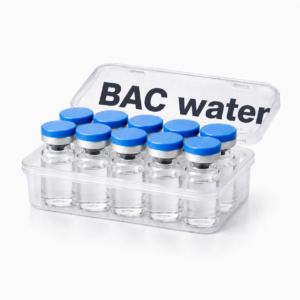
Bacteriostatic Water (BAC Water) — The Standard Multi-Use Reconstitution Solvent
BAC Water is 0.9% benzyl alcohol in sterile Water for Injection (WFI) — the standard multi-use reconstitution solvent for the vast majority of lyophilized research peptides. The 0.9% benzyl alcohol provides bacteriostatic preservation, allowing researchers to draw from the same reconstituted vial multiple times over days to weeks without microbial contamination of the research sample.
Use BAC Water for: BPC-157, TB-500, Semaglutide, Tirzepatide, Retatrutide, Cagrilitide, Mazdutide, CJC-1295, Ipamorelin, Sermorelin Acetate, Tesamorelin, HGH, GHK-Cu, KPV Peptide, Thymosin Alpha-1, SS-31 (Elamipretide), Epitalon, Semax, Selank, Kisspeptin-10, Oxytocin Acetate, HCG, and all Peptide Blends & Stacks including the Glow Blend and Klow Blend.
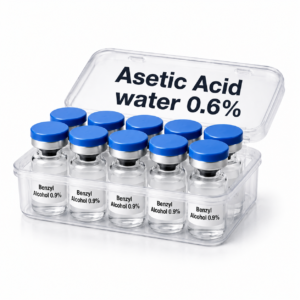
Acetic Acid Water 0.6% — For Hydrophobic & Acid-Soluble Peptides
Acetic Acid Water 0.6% is a mildly acidic sterile solution (pH ~3.0–4.0) specifically used for research peptides that cannot achieve adequate solubility in neutral-pH solvents. The acidic environment protonates amine groups on hydrophobic amino acid residues, dramatically increasing aqueous solubility for peptides with hydrophobic sequence profiles.
Use Acetic Acid Water 0.6% for: IGF-1 LR3 (primary recommended solvent) and other hydrophobic or acid-soluble peptides as specified in their published reconstitution protocols. After initial reconstitution in Acetic Acid Water, the solution can be diluted to working concentration with BAC Water or sterile saline.
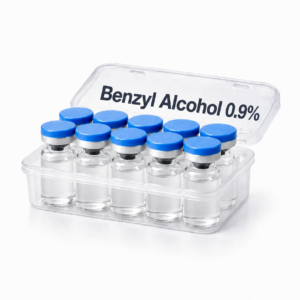
Benzyl Alcohol 0.9% — For Custom Buffer Preparation
Benzyl Alcohol 0.9% is the active bacteriostatic preservative component in BAC Water, supplied here as a standalone sterile solution in a clean Water for Injection (WFI) base — with no saline or sodium chloride additives. It is used for custom reconstitution buffer preparation and multi-dose research vial formulation where researchers need direct control over the exact composition of their reconstitution vehicle.
Use Benzyl Alcohol 0.9% for: Custom peptide reconstitution buffer preparation, multi-dose research vial formulation, and research protocols requiring a clean WFI base without the sodium chloride content present in some commercial BAC Water sources.
Quick Reference — Solvent Selection Guide
| Solvent | pH | Bacteriostatic | Primary Use |
|---|---|---|---|
| BAC Water | 4.5–7.0 | ✅ Yes (0.9% BZA) | Standard reconstitution — most research peptides |
| Acetic Acid Water 0.6% | ~3.0–4.0 | ❌ No | IGF-1 LR3 and hydrophobic/acid-soluble peptides |
| Benzyl Alcohol 0.9% | 4.5–7.0 | ✅ Yes (standalone) | Custom buffer preparation — clean WFI base, no saline |
Universal Reconstitution Best Practice
Regardless of which solvent your research peptide requires, the following technique applies universally to protect peptide integrity during reconstitution:
- Equilibrate the peptide vial: Allow the sealed lyophilized vial to reach room temperature before opening — cold sealed vials can create internal pressure when punctured, risking material loss
- Use sterile technique throughout: Clean vial septa with an alcohol swab before every puncture. Use sterile needles and syringes. Work in a clean, ideally laminar-flow environment
- Inject solvent down the vial wall: Add reconstitution solvent slowly down the inside wall of the peptide vial — never inject directly onto the lyophilized powder cake, which causes aggregation and incomplete dissolution
- Swirl gently — never shake: Gently swirl or invert the vial to mix. Vigorous shaking introduces air bubbles, causes foaming, and can mechanically damage peptide structure. Do not vortex
- Allow complete dissolution: Allow 2–5 minutes for slow-dissolving peptides. The solution should be clear and colourless (or light blue for GHK-Cu). Any persistent cloudiness or particulates warrants review of solvent choice and storage conditions
- Label and store correctly: Label all reconstituted vials with compound name, batch number, concentration, and reconstitution date. Store according to each compound’s specific post-reconstitution requirements
Why Solvent Purity Matters as Much as Peptide Purity
A research peptide at 99%+ purity reconstituted in a contaminated or incorrectly formulated solvent produces compromised research data — regardless of the peptide’s own quality. Contaminants in a reconstitution solvent introduce experimental confounds, alter peptide solubility profiles, and can directly affect cell viability in sensitive in vitro assay systems. For benzyl alcohol specifically, concentrations significantly above 0.9% can affect cell viability in sensitive research models — making independent concentration verification essential, not optional.
Every reconstitution solvent in PrimaLab Peptide’s Accessories & Reconstitution Supplies category is independently tested by Janoshik Analytical for confirmed concentration, sterility, and absence of contaminants — providing the same independent third-party verification standard applied to all research peptides in the PrimaLab Peptide catalog. The batch-specific COA is available on request for every product in this category.
Bulk & Wholesale Orders
Laboratories, research institutions, and procurement teams requiring larger quantities of peptide reconstitution supplies can apply for discounted rates through our Wholesale Portal. Dedicated account management and priority dispatch are available for verified wholesale accounts.
Browse our complete range of research peptide categories: Healing & Repair Peptides, Growth Hormone Peptides, Metabolic Peptides, Nootropic & Neuro Peptides, Wellness & Longevity, and Peptide Blends & Stacks.
⚠️ All reconstitution supplies are for laboratory research use only. Not intended for human or veterinary consumption. Handle in accordance with all applicable institutional safety protocols and regulatory guidelines.
Showing all 3 results