
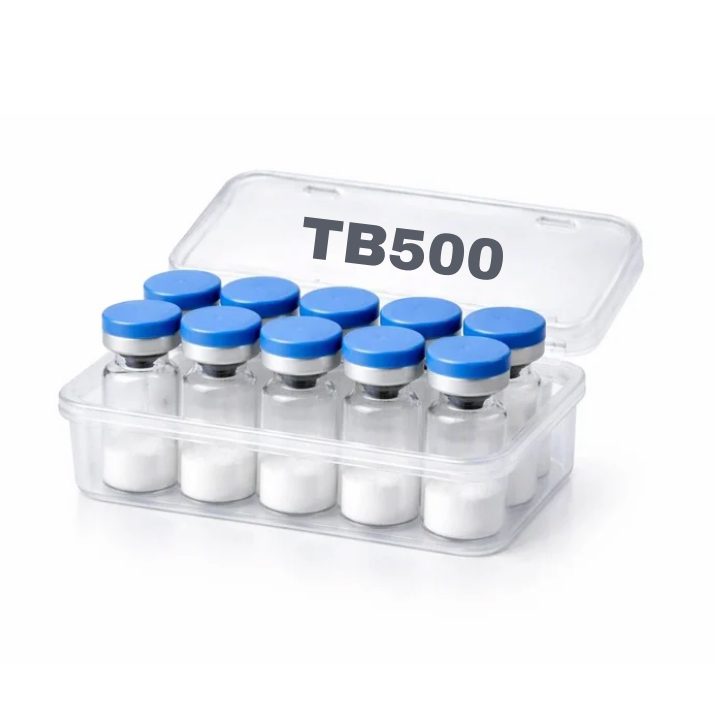
Buy TB-500 Peptide | Proven Thymosin Beta-4 Acetate for Tissue Regeneration Research | PrimaLab Peptide
TB-500 (Thymosin Beta-4 Acetate) is a synthetic 43-amino acid peptide and one of the most studied tissue regeneration and cellular migration research compounds available. Derived from the actin-binding sequence of Thymosin Beta-4, a ubiquitous intracellular protein found in virtually all mammalian cells, TB-500 is studied for its roles in actin polymerisation regulation, cellular migration facilitation, muscle fibre regeneration, anti-fibrotic signalling, and angiogenesis in both in vitro and in vivo research models.
Researchers who buy TB-500 peptide use it across a wide range of tissue repair research applications, most frequently alongside BPC-157 for complementary dual-pathway healing research. PrimaLab Peptide supplies research-grade TB-500 at 99.36% purity, independently verified by Janoshik Analytical via HPLC, with a full batch-specific Certificate of Analysis included with every order.
What Is TB-500 (Thymosin Beta-4 Acetate)?
TB-500 is the research peptide designation for a synthetic 43-amino acid sequence corresponding to the active region of Thymosin Beta-4 (Tβ4) — specifically the actin-binding and cellular migration-stimulating fragment. The sequence begins with an N-terminal acetylation (Ac-LKKTETQ…) — the “acetate” in Thymosin Beta-4 Acetate refers to this N-terminal acetyl group, which is a defining structural feature of authentic Tβ4. This acetylation is functionally important: it is not merely a salt form designation but a covalent modification of the N-terminal serine residue that contributes to actin G-monomer binding affinity.
Molecular formula: C₂₁₂H₃₅₀N₅₆O₇₈S | MW: 4963.5 Da | 43 amino acids
A critical clarification for research protocol design: TB-500 is not the same as fragments of Thymosin Beta-4 such as the Ac-SDKP tetrapeptide (a separate fragment of Tβ4 with distinct biological activity). TB-500 refers specifically to the full-length 43-amino acid Thymosin Beta-4 Acetate synthetic sequence. Always verify the amino acid count (43aa) and MW (4963.5 Da) on your COA to confirm you have the full-length compound rather than a shorter fragment.
A comprehensive overview of Thymosin Beta-4’s biology and research applications is available through published PubMed research on Thymosin Beta-4.
TB-500 Research Applications
TB-500’s actin-sequestering mechanism and cellular migration-facilitating activity make it a versatile research tool across multiple tissue types and healing biology research areas:
- Actin biology and cytoskeletal research: Thymosin Beta-4 is one of the most abundant intracellular actin-sequestering proteins — maintaining the pool of unpolymerised G-actin available for rapid cytoskeletal remodelling. TB-500 research examines how Tβ4-mediated actin sequestration regulates cytoskeletal dynamics, cell morphology, and the actin-polymerisation-dependent processes of cellular migration and wound healing
- Cellular migration research: TB-500’s stimulation of cellular migration is one of its most published research properties. Studies have examined its effects on fibroblast, endothelial cell, and keratinocyte migration in wound healing research models — all of which require directed actin-polymerisation-dependent cellular movement
- Muscle fibre repair and regeneration research: Research has examined TB-500’s effects on satellite cell activation and myoblast migration in skeletal muscle repair research models — relevant to muscle biology, sarcopenia research, and exercise physiology research contexts
- Anti-fibrotic signalling research: Studies have examined TB-500’s effects on fibrotic marker expression and TGF-β pathway modulation in tissue repair research models — an important complement to its pro-regenerative cellular migration properties
- Angiogenesis research: TB-500 has been studied for effects on endothelial cell migration and new blood vessel formation in tissue repair research models, complementing the angiogenic research properties of BPC-157
- Cardiac tissue research: Research has examined TB-500’s effects on cardiac tissue repair mechanisms, cardiomyocyte protection, and cardiac regeneration in preclinical research models
- Combined healing research: TB-500 is most frequently studied in research alongside BPC-157 — available together as the BPC-157 + TB-500 Blend — for complementary dual-pathway tissue repair research. Both compounds are also components of the Glow Blend and Klow Blend multi-compound healing research stacks
Is TB-500 the Same as BPC-157?
No — TB-500 and BPC-157 are completely distinct research compounds and should not be confused or substituted for one another. The key differences for research design:
- TB-500: 43-amino acid Thymosin Beta-4 acetate. Mechanism: actin sequestration, G-actin pool regulation, cellular migration facilitation, anti-fibrotic signalling. Research focus: cytoskeletal biology, cellular motility-dependent healing processes, muscle regeneration
- BPC-157: 15-amino acid pentadecapeptide from gastric juice protein. Mechanism: growth factor receptor modulation (VEGFR, EGFR), VEGF-mediated angiogenesis, nitric oxide pathway interaction. Research focus: gastrointestinal mucosal biology, multi-system tissue repair, vascular biology
Many researchers study both compounds in the same research program because their mechanisms are complementary — actin-mediated cellular migration (TB-500) and growth factor-mediated angiogenesis and tissue repair signalling (BPC-157). This complementarity is the basis for the extensive co-use of both compounds in published preclinical healing research.
Purity & Third-Party Testing
Every batch of TB-500 supplied by PrimaLab Peptide is independently tested by Janoshik Analytical — an independent Czech analytical laboratory widely used in the research peptide community:
- HPLC — quantitative purity confirmed at 99.36%
- COA — batch-specific, tied to the specific lot on your vial. Downloadable and publicly posted — you can verify before ordering
The 99.36% purity figure is independently generated by Janoshik — not self-reported by the supplier. The COA is posted per batch, not recycled from previous lots. Verify the batch number on your vial against the COA before use in any research protocol.
Storage & Reconstitution
- Lyophilized (sealed): Store at −20°C, away from light. Stable for 24+ months under correct storage conditions
- After reconstitution: Store at 2–8°C and use within 30 days. Do not freeze reconstituted TB-500 — freeze-thaw cycling degrades peptide integrity
- Reconstitution: Use sterile Bacteriostatic Water (BAC Water) or sterile water. Add solvent slowly down the inside vial wall — never directly onto the lyophilized powder. Swirl gently — do not shake or vortex
- Freeze-thaw cycles: Avoid. Aliquot working doses before storage if multiple experiments are planned
- Aseptic technique: Standard sterile lab technique applies throughout reconstitution and handling
Product Specifications
| Full Name | Thymosin Beta-4 Acetate (TB-500) |
| Sequence Start | Ac-Ser-Asp-Lys-Pro-Asp-Met-Ala-Glu-Ile-Glu-Lys-Phe-Asp-Lys-Ser-Lys-Leu-Lys-Lys-Thr-Glu-Thr-Gln-Glu-Lys-Asn-Pro-Leu-Pro-Ser-Lys-Glu-Thr-Ile-Glu-Gln-Glu-Lys-Gln-Ala-Gly-Glu-Ser |
| Amino Acids | 43 |
| N-Terminal | Acetylated (Ac-) — defining feature of authentic Thymosin Beta-4 |
| Molecular Formula | C₂₁₂H₃₅₀N₅₆O₇₈S |
| Molecular Weight | 4963.5 Da |
| Purity | 99.36% (Janoshik HPLC verified) |
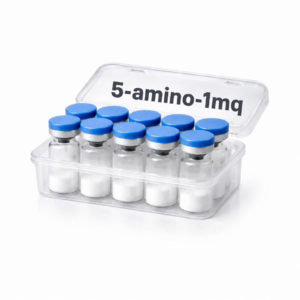
| Form | Lyophilized white powder |
| Available Sizes | 5mg, 10mg |
| Storage (sealed) | −20°C, away from light — 24+ months |
| Storage (reconstituted) | 2–8°C, use within 30 days — do not freeze |
| Reconstitution | BAC Water or sterile water |
| Testing Lab | Janoshik Analytical (independent — Czech lab) |
| COA | Batch-specific, publicly posted — included with every order |
| Intended Use | Research purposes only — not for human use |
Frequently Asked Questions — TB-500 Peptide
What is TB-500 used for in research?
Researchers who buy TB-500 peptide use it to investigate actin biology and cytoskeletal dynamics, cellular migration mechanisms in wound healing research models, muscle fibre repair and satellite cell activation, anti-fibrotic signalling pathways, angiogenesis through endothelial cell migration, cardiac tissue repair mechanisms, and comprehensive tissue repair biology in combination with BPC-157. Its actin-sequestering mechanism makes it the primary research tool for studying Thymosin Beta-4-mediated cellular motility in healing contexts. Published literature is available on PubMed.
Is TB-500 the same as BPC-157?
No — they are completely distinct research compounds with different sequences, mechanisms, and research applications. TB-500 is a 43-amino acid Thymosin Beta-4 acetate studied for actin sequestration and cellular migration. BPC-157 is a 15-amino acid pentadecapeptide from gastric juice protein studied for growth factor receptor modulation, angiogenesis, and gastrointestinal protection. They are not interchangeable — many researchers study both in the same program because their mechanisms are complementary, not redundant.
What is the significance of the N-terminal acetylation in TB-500?
The N-terminal acetylation (Ac-) of Thymosin Beta-4 at its serine residue is not merely a salt designation — it is a covalent modification that contributes to actin G-monomer binding affinity and biological activity. This acetylation is a defining structural feature of authentic Thymosin Beta-4 Acetate. Verify the presence of this modification through mass spectrometry MW confirmation (4963.5 Da for the correctly acetylated 43-amino acid sequence). The “acetate” in TB-500 Thymosin Beta-4 Acetate refers specifically to this N-terminal acetyl group, distinguishing it from non-acetylated synthetic variants.
How pure is PrimaLab Peptide’s TB-500?
Our TB-500 tests at 99.36% purity, independently verified by Janoshik Analytical — an independent Czech analytical laboratory. This is a documented lab result, not a self-reported figure. The batch-specific COA is publicly posted and included with every order. Verify the batch number on your vial against the Janoshik COA before use.
Can TB-500 be frozen after reconstitution?
No — do not freeze reconstituted TB-500. Once reconstituted in BAC Water or sterile water and stored at 2–8°C, TB-500 solution should be used within 30 days. Freeze-thaw cycling of the reconstituted solution degrades peptide integrity. If your protocol requires multiple experiments from the same vial over an extended period, aliquot the lyophilized powder before initial reconstitution — each aliquot undergoes only one reconstitution cycle.
What peptides are most commonly researched alongside TB-500?
TB-500’s most common research combination is with BPC-157 for complementary dual-pathway healing research — available as the BPC-157 + TB-500 Blend. For extended multi-compound healing stacks, researchers explore the Glow Blend (TB-500 + BPC-157 + GHK-Cu) and Klow Blend (TB-500 + BPC-157 + GHK-Cu + KPV). Individual companion compounds also studied alongside TB-500 include GHK-Cu (collagen synthesis research) and Thymosin Alpha-1 (immune modulation).
Related Research Peptides
Researchers buying TB-500 peptide for tissue repair and healing research frequently explore:
- BPC-157 — body protection compound for multi-system tissue repair and angiogenesis research
- BPC-157 + TB-500 Blend — foundational dual healing research combination
- GHK-Cu (Copper Peptide) — collagen synthesis and dermal matrix research peptide
- KPV Peptide — alpha-MSH C-terminal tripeptide for anti-inflammatory research
- Glow Blend (TB-500 + BPC-157 + GHK-Cu) — triple healing research stack
- Klow Blend (TB-500 + BPC-157 + GHK-Cu + KPV) — quad healing research stack
- Thymosin Alpha-1 — immunomodulatory peptide for immune function research
Browse our complete Healing & Repair Peptides category. Bulk researchers can apply for discounted rates through our Wholesale Portal. Reconstitute with BAC Water, available in our Accessories & Reconstitution Supplies section.
⚠️ For research purposes only. Not for human use. Not a drug, not a supplement, not a medical treatment. All products are sold strictly for in-vitro laboratory research. Researchers are solely responsible for compliance with all applicable local laws and regulations.
Reviews
There are no reviews yet.