
Buy BAC Water Peptide Reconstitution
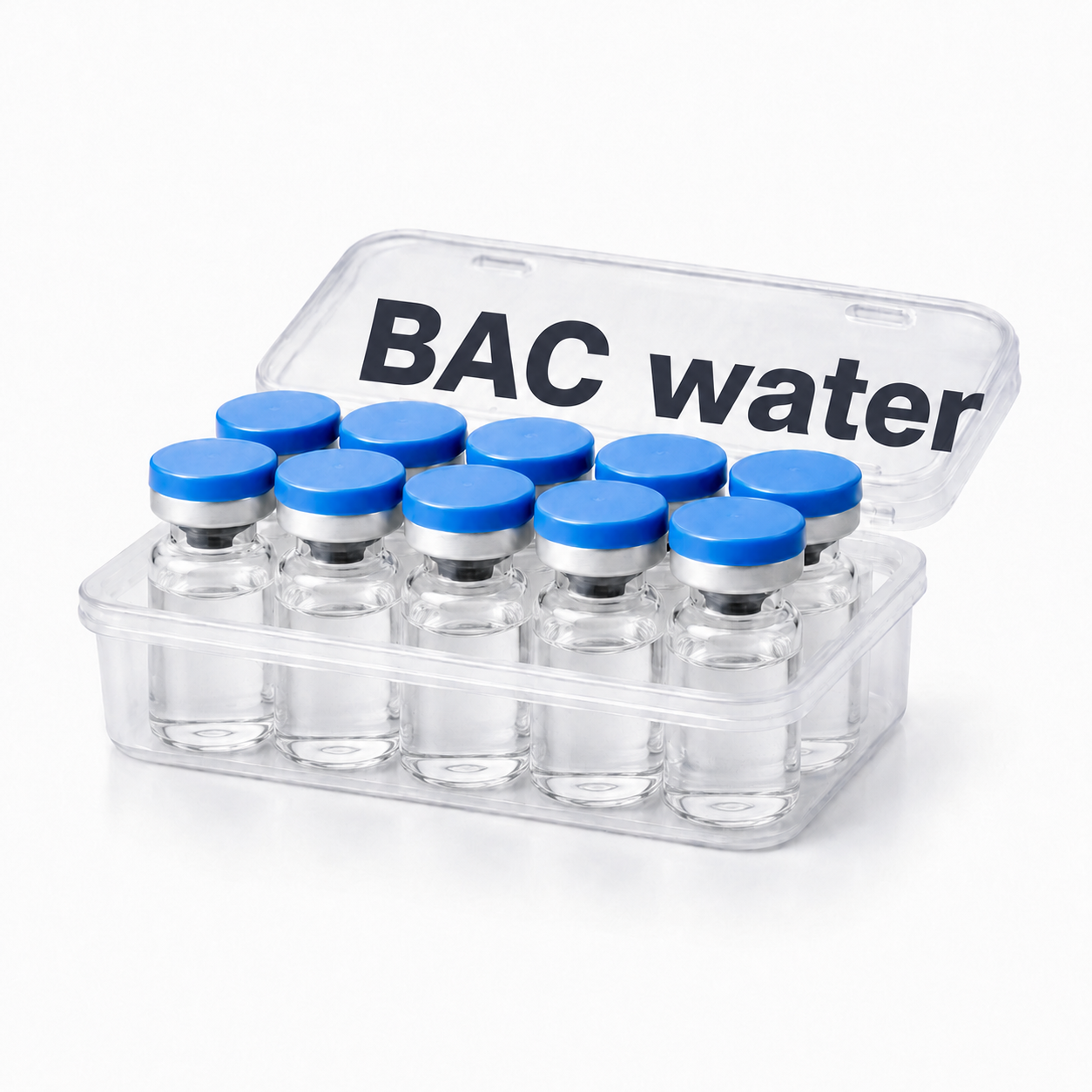
When researchers buy BAC water for peptide reconstitution, they are making a decision that directly affects the downstream quality, stability, and reproducibility of their research data. BAC Water (Bacteriostatic Water) — 0.9% benzyl alcohol in sterile water for injection — is the standard multi-use reconstitution solvent for the vast majority of lyophilized research peptides. PrimaLab Peptide supplies research-grade BAC water in sterile 10ml septum vials, Janoshik COA verified, sterile-filtered at 0.22µm, with every batch independently tested for benzyl alcohol concentration, sterility, and absence of contamination before dispatch.
What Is BAC Water and Why Does It Matter for Peptide Research?
BAC Water is a sterile aqueous solution containing 0.9% benzyl alcohol (9 mg/mL) in Water for Injection (WFI). Its function in research peptide reconstitution is twofold: it provides an aqueous vehicle to dissolve lyophilized peptide powder into a workable research solution, and it provides bacteriostatic preservation — meaning the benzyl alcohol inhibits bacterial proliferation in the reconstituted solution, allowing researchers to draw from the same vial multiple times over days or weeks without immediate microbial contamination of the sample.
The choice of reconstitution solvent is not trivial. Using the wrong solvent can degrade a peptide rapidly, alter its solubility profile, or introduce experimental confounds. A comprehensive discussion of peptide reconstitution solvent selection is available in the Sigma-Aldrich peptide solubilisation technical reference. BAC water is compatible with most standard research peptide sequences, does not react aggressively with peptide bonds, and does not cause hydrophobic residue precipitation as plain sterile water can in some sequences.
BAC Water vs. Sterile Water for Injection — Key Differences
Understanding the difference between BAC Water and Sterile Water for Injection (SWFI) is essential for correct reconstitution protocol design:
- BAC Water: Contains 0.9% benzyl alcohol — bacteriostatic preservation allows multi-use from the same vial over days to weeks. pH 4.5–7.0. Compatible with most research peptide sequences. Standard choice for peptides requiring repeated access to the same reconstituted vial
- Sterile Water for Injection (SWFI): Contains no additives — no bacteriostatic preservation. Single-use only. Once opened, microbial contamination risk increases rapidly. Suitable for single-use reconstitution where the entire volume is used immediately
- Acetic Acid Water 0.6%: For hydrophobic and acid-soluble peptides requiring acidic reconstitution conditions — particularly IGF-1 LR3. Not interchangeable with BAC Water for standard peptides. Available separately from PrimaLab Peptide: Acetic Acid Water 0.6%
Which Research Peptides Use BAC Water for Reconstitution?
BAC Water is the recommended reconstitution solvent for the majority of lyophilized research peptides in the PrimaLab Peptide catalog, including:
- BPC-157 — body protection compound healing peptide
- TB-500 (Thymosin Beta-4 Acetate) — tissue regeneration peptide
- Semaglutide — GLP-1 receptor agonist metabolic peptide
- Tirzepatide — dual GIP/GLP-1 receptor agonist
- CJC-1295 — GHRH analogue growth hormone peptide
- Ipamorelin — selective GH secretagogue
- Thymosin Alpha-1 — immunomodulatory peptide
- Epitalon — telomere longevity research peptide
- All Peptide Blends & Stacks including the Klow Blend and Glow Blend
For IGF-1 LR3 and other acid-requiring peptides, use Acetic Acid Water 0.6% instead. Always verify the recommended reconstitution solvent in your specific peptide’s protocol documentation before proceeding.
Purity, Sterility & Third-Party Testing
Reconstitution solvent quality is as important as peptide purity in any serious research workflow. Contaminants or incorrect benzyl alcohol concentration in a BAC water vial introduce confounds that can invalidate downstream research results — regardless of how pure the peptide itself is. PrimaLab Peptide supplies BAC Water with independent verification through Janoshik Analytical, confirming:
- Benzyl alcohol concentration — verified at 0.9% (9 mg/mL, PhEur standard)
- Sterility markers — confirmed absence of microbial contamination
- Purity — absence of undisclosed additives or contaminants
The COA is available on request for every batch. If a BAC water supplier does not provide independent testing documentation, that is a direct red flag for research quality — reconstitution quality directly affects downstream assay results. General guidance on sterile water standards for injection is published by the United States Pharmacopeia (USP) and European Medicines Agency (EMA) residual solvent guidelines.
Step-By-Step Peptide Reconstitution With BAC Water
- Equilibrate the peptide vial: Allow the sealed lyophilized peptide vial to sit at room temperature for a few minutes before use. Cold powder in a sealed vial can create internal pressure when punctured, risking material loss
- Prepare your workspace: Use a laminar flow environment or at minimum a clean, sanitised workspace. Use sterile needles and syringes. Aseptic technique is mandatory every time you access either the BAC water or peptide vial
- Draw BAC Water: Using a clean insulin syringe, draw the required volume of BAC Water from the septum vial
- Inject along the vial wall: Insert the needle into the peptide vial and inject BAC Water slowly down the inside wall — never directly onto the lyophilized powder cake, as this can cause aggregation and incomplete dissolution
- Swirl gently — do not shake: Gently swirl or invert the vial. Vigorous shaking introduces air bubbles, causes foaming, and can damage peptide structure. Allow 2–5 minutes for complete dissolution
- Inspect the solution: The reconstituted solution should be clear and colourless with no visible particulates. Any cloudiness or precipitation is a warning sign — review solvent choice, peptide storage conditions, and protocol
- Label and store: Label the reconstituted vial with the reconstitution date and concentration. Store at 2–8°C or −20°C depending on compound-specific requirements. Most peptide solutions reconstituted in BAC Water remain viable for 4–6 weeks refrigerated with proper aseptic technique
Product Specifications
| Product Name | BAC Water (Bacteriostatic Water) |
| Formula | Water for Injection + 0.9% benzyl alcohol (PhEur) |
| Form | Sterile liquid solution |
| Volume | 10ml septum vial |
| Benzyl Alcohol Concentration | 0.9% (9 mg/mL) |
| pH | 4.5–7.0 (typical) |
| Sterility | Sterile-filtered (0.22µm) |
| Purity Testing | Janoshik Analytical verified |
| COA | Available on request |
| Storage (sealed) | 2–8°C, protect from light |
| Storage (post-reconstitution) | 2–8°C or −20°C (compound-dependent) |
| Intended Use | Laboratory research only — not for human or veterinary use |
Frequently Asked Questions — BAC Water
Why is BAC Water preferred over plain sterile water for peptide reconstitution?
The key difference is bacteriostatic preservation. Plain Sterile Water for Injection (SWFI) contains no preservatives and is single-use — once opened, microbial contamination risk increases rapidly. BAC Water’s 0.9% benzyl alcohol inhibits bacterial proliferation, allowing researchers to draw from the same reconstituted peptide vial multiple times over days to weeks with maintained sterility — provided aseptic technique is used every time. For any research protocol requiring repeated access to the same reconstituted solution, BAC Water is the appropriate choice.
Is PrimaLab Peptide’s BAC Water independently tested?
Yes. Every batch is independently verified by Janoshik Analytical, confirming benzyl alcohol concentration at 0.9% (PhEur), sterility, and absence of contamination. The COA is available on request. If any BAC water supplier cannot provide third-party testing documentation, that is a quality red flag — reconstitution solvent purity directly affects downstream research results.
How long does a reconstituted peptide solution last in BAC Water?
Most lyophilized research peptides reconstituted in BAC Water and stored refrigerated at 2–8°C remain viable for approximately 4–6 weeks with proper aseptic technique. However, this varies significantly by compound — some peptides are inherently less stable in aqueous solution regardless of solvent. Always check compound-specific stability data, label your vials with the reconstitution date and concentration, and discard any solution that appears cloudy, discoloured, or precipitated.
Which peptides should NOT be reconstituted with BAC Water?
Peptides requiring acidic reconstitution conditions — particularly IGF-1 LR3 and certain GH-releasing peptides with hydrophobic residue profiles — should be reconstituted with Acetic Acid Water 0.6% instead of BAC Water. Using an incorrect reconstitution solvent can significantly reduce peptide solubility and yield. Always verify the recommended reconstitution solvent in your specific peptide’s protocol documentation.
What is the correct volume of BAC Water to use for peptide reconstitution?
The correct reconstitution volume depends on the target working concentration required for your specific research protocol and the mass of peptide in the vial. A commonly used starting point is 1–2 mL of BAC Water per 5mg peptide vial, producing a concentration of 2.5–5 mg/mL, but this should always be verified against your specific compound and assay requirements. Refer to your peptide supplier’s reconstitution guidance and published literature for compound-specific recommendations.
Can BAC Water be frozen before use?
The sealed BAC Water vial should be stored refrigerated at 2–8°C — do not freeze before opening. Freezing can cause the benzyl alcohol to precipitate from solution, altering its concentration and potentially compromising sterility when thawed. After reconstituting a peptide in BAC Water, the reconstituted peptide solution may require −20°C storage depending on the specific compound’s stability requirements.
Related Reconstitution Supplies
PrimaLab Peptide supplies a complete range of reconstitution solvents for research peptide preparation:
- Acetic Acid Water 0.6% — recommended reconstitution solvent for IGF-1 LR3 and hydrophobic acid-soluble peptides
- Benzyl Alcohol 0.9% — bacteriostatic preservative for custom peptide solution preparation
Browse our complete Accessories & Reconstitution Supplies category. Laboratory procurement teams and bulk researchers can apply for discounted rates through our Wholesale Portal.
⚠️ For laboratory research use only. Not intended for human or veterinary consumption. Handle in accordance with all applicable institutional safety protocols and regulatory guidelines.
Reviews
There are no reviews yet.