
Buy BPC-157 TB-500 Blend | Trusted Dual Healing Research Peptide Stack | PrimaLab Peptide
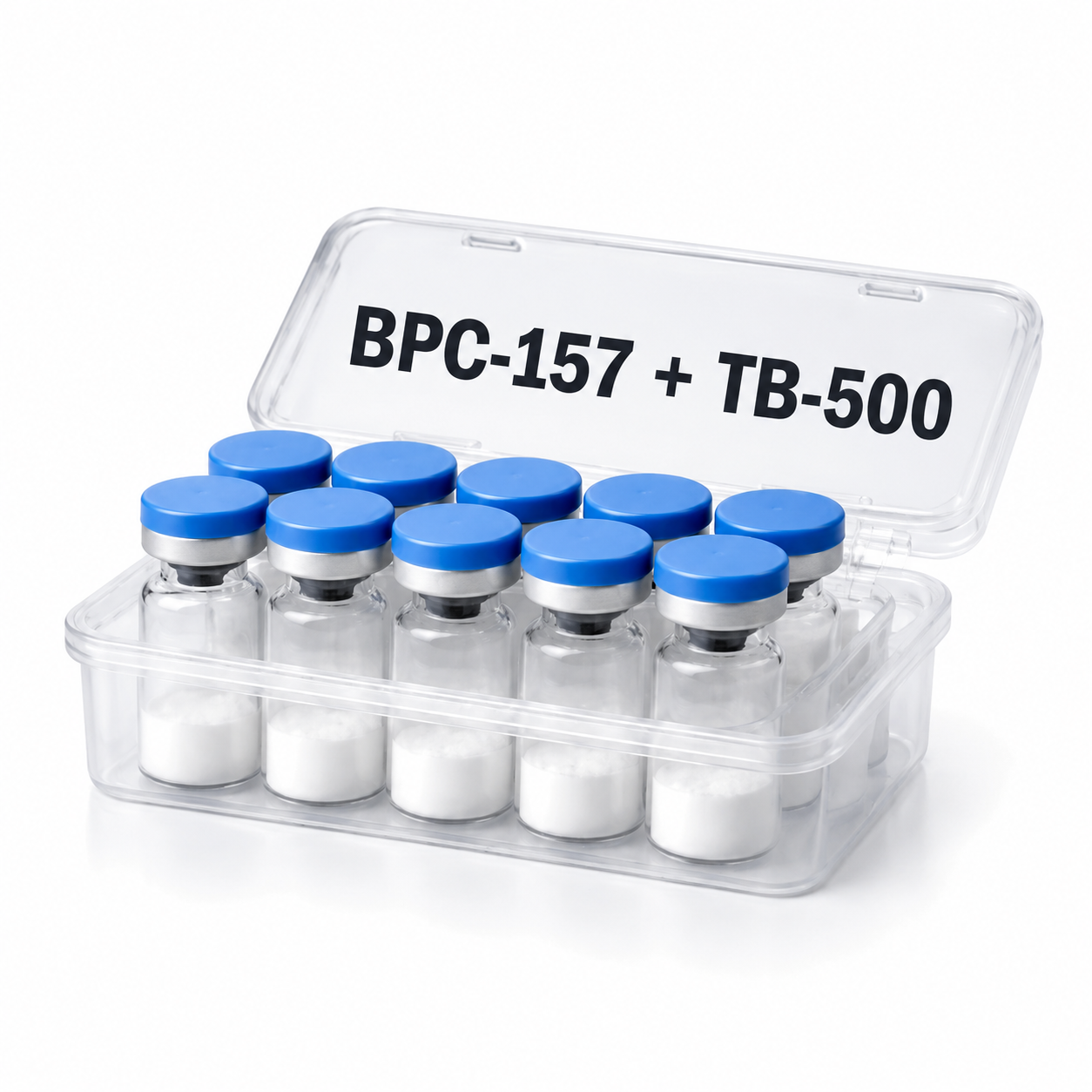
The BPC-157 + TB-500 combination is the most widely studied dual healing research peptide pairing in published preclinical literature — combining Body Protection Compound 157 (BPC-157) and Thymosin Beta-4 fragment (TB-500) into a single order. Researchers who buy BPC-157 TB-500 blend use the combination to investigate complementary tissue repair, regeneration, and healing pathway mechanisms simultaneously — BPC-157 through growth factor modulation and angiogenesis, and TB-500 through actin-mediated cellular migration and anti-fibrotic mechanisms. PrimaLab Peptide supplies this combination as two separately supplied lyophilized vials — BPC-157 5mg and TB-500 5mg — each independently tested by Janoshik Analytical with its own batch-specific Certificate of Analysis, giving researchers maximum traceability and independent documentation for both compounds.
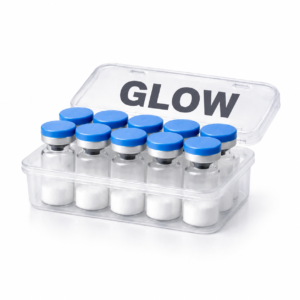
Important note on format: This listing supplies BPC-157 and TB-500 as two separate vials with independent COAs — not co-lyophilized in a single vial. For researchers who prefer a single co-lyophilized vial containing both compounds, see the Glow Blend (TB-500 10mg + BPC-157 10mg + GHK-Cu 50mg) or Klow Blend. Two separate vials provide greater research flexibility — allowing independent reconstitution at different concentrations if your protocol requires it.
What Is in the BPC-157 + TB-500 Combination?
BPC-157 (Body Protection Compound 157) — 5mg vial
BPC-157 is a synthetic 15-amino acid pentadecapeptide (sequence: Gly-Glu-Pro-Pro-Pro-Gly-Lys-Pro-Ala-Asp-Asp-Ala-Gly-Leu-Val) derived from a protective protein sequence found in gastric juice. CAS: 137525-51-0. Molecular formula C₆₂H₉₈N₁₆O₂₂, MW: 1419.53 g/mol. BPC-157 is one of the most extensively studied healing peptides in published preclinical research, with a broad literature covering multi-system tissue repair, gastrointestinal mucosal protection, angiogenesis mechanisms, tendon and ligament biology, and neuroprotective pathway research. Purity: ≥99.36% (Janoshik HPLC + MS verified). Full product details: BPC-157 product page.
TB-500 (Thymosin Beta-4 Fragment) — 5mg vial
TB-500 is a synthetic 43-amino acid peptide corresponding to a fragment of Thymosin Beta-4 (the actin-binding sequence Ac-Ser-Asp-Lys-Pro-Asp-Met-Ala-Glu-Ile-Glu-Lys-Phe-Asp-Lys-Ser-Lys-Leu-Lys-Lys-Thr-Glu-Thr-Gln-Glu-Lys-Asn-Pro-Leu-Pro-Ser-Lys-Glu-Thr-Ile-Glu-Gln-Glu-Lys-Gln-Ala-Gly-Glu-Ser). Molecular formula C₂₁₂H₃₅₀N₅₆O₇₈S, MW: 4963.5 Da. As the key actin-sequestering fragment of Thymosin Beta-4, TB-500 has been studied for its role in actin polymerisation regulation, cellular migration facilitation, muscle fibre regeneration, anti-fibrotic mechanisms, and angiogenesis research. Purity: ≥99.1% (Janoshik HPLC verified). Full product details: TB-500 product page.
Why Researchers Study BPC-157 and TB-500 Together
BPC-157 and TB-500 are structurally distinct peptides that work through different and complementary mechanisms — making their combination a logical dual-pathway research design for tissue repair and healing studies:
- BPC-157’s research mechanisms: Growth factor receptor pathway modulation (VEGFR, EGFR), angiogenesis through VEGF upregulation, gastrointestinal protective signalling, nitric oxide system interaction, and multi-system tissue repair research. BPC-157 is particularly studied for its effects on gastrointestinal, tendon, ligament, and vascular tissue research models
- TB-500’s research mechanisms: Actin sequestration and cytoskeletal modulation through Thymosin Beta-4’s Ac-SDKP actin-binding motif, cellular migration facilitation in wound healing models, muscle fibre repair, anti-fibrotic signalling, and angiogenesis research. TB-500 is particularly studied for its effects on cellular motility-dependent healing processes
- Complementary rather than redundant: The two compounds address different phases and mechanisms of healing biology — BPC-157’s growth factor-mediated and gastrointestinal focus complements TB-500’s actin-migration and cytoskeletal focus without redundant mechanism overlap, producing a more comprehensive dual-pathway research design than either compound alone
Published preclinical research on both compounds is available through PubMed research on BPC-157 and TB-500. For the extended three-compound healing research stack adding GHK-Cu copper peptide collagen synthesis research, see the Glow Blend. For the most comprehensive four-compound stack adding KPV anti-inflammatory coverage, see the Klow Blend.
Two Separate Vials — Independent COAs for Each
Unlike pre-blended products such as the Glow Blend, the BPC-157 + TB-500 combination supplies each peptide as a separate independently verified lyophilized vial. This format provides:
- Independent purity verification: Each vial has its own Janoshik COA tied to its specific batch — BPC-157 at ≥99.36% and TB-500 at ≥99.1%, each independently documented
- Research flexibility: Separate vials allow independent reconstitution at different working concentrations if your protocol requires different concentration ratios of BPC-157 to TB-500
- Independent storage: Each compound can be stored and aliquoted independently according to compound-specific stability requirements
- Documentation traceability: Two separate batch-specific COAs provide full documentation for each compound independently — important for research records and institutional audit trails
Purity & Third-Party Testing
Both peptides in this combination are independently tested by Janoshik Analytical — an independent laboratory with no commercial interest in the results:
- BPC-157: ≥99.36% purity by HPLC, with mass spectrometry identity confirmation (MW: 1419.53 g/mol, CAS: 137525-51-0)
- TB-500: ≥99.1% purity by HPLC, with mass spectrometry identity confirmation (MW: 4963.5 Da)
Each vial ships with its own batch-specific COA. Sequence accuracy for both compounds is verified by mass spectrometry — not just purity. You receive the actual Janoshik report for your specific batch of each compound, not a template document.
Storage & Reconstitution
Both BPC-157 and TB-500 are supplied as lyophilized powders with the same storage requirements:
- Lyophilized (sealed): Store both vials at −20°C, away from light and moisture. Standard lyophilized peptide freezer storage applies to both compounds
- After reconstitution: Store at 2–8°C for both compounds. BPC-157 is typically used within 4 weeks post-reconstitution; TB-500 within 2–3 weeks
- Reconstitution solvent: Use sterile Bacteriostatic Water (BAC Water) for both compounds. Add solvent slowly down the inside vial wall — never directly onto the lyophilized powder. Swirl gently — do not shake or vortex
- Aseptic technique: Standard aseptic lab technique is mandatory during all handling and reconstitution steps for both compounds
- Freeze-thaw cycles: Avoid for both — aliquot working doses before storage if your protocol requires multiple experiments
- Independent reconstitution: Reconstitute each compound separately in its own vial — do not mix BPC-157 and TB-500 solutions unless specifically required by your research protocol
Product Specifications
| BPC-157 Full Name | Body Protection Compound 157 |
| BPC-157 CAS | 137525-51-0 |
| BPC-157 Sequence | Gly-Glu-Pro-Pro-Pro-Gly-Lys-Pro-Ala-Asp-Asp-Ala-Gly-Leu-Val |
| BPC-157 Formula | C₆₂H₉₈N₁₆O₂₂ |
| BPC-157 MW | 1419.53 g/mol |
| BPC-157 Purity | ≥99.36% (Janoshik HPLC + MS) |
| BPC-157 Vial Size | 5mg |
| TB-500 Full Name | Thymosin Beta-4 Fragment (TB-500) |
| TB-500 Amino Acids | 43 |
| TB-500 Formula | C₂₁₂H₃₅₀N₅₆O₇₈S |
| TB-500 MW | 4963.5 Da |
| TB-500 Purity | ≥99.1% (Janoshik HPLC) |
| TB-500 Vial Size | 5mg |
| Format | Two separate lyophilized vials — independent COA per vial |
| Storage (both) | −20°C sealed, 2–8°C after reconstitution |
| Reconstitution (both) | Bacteriostatic Water (BAC Water) |
| Testing Lab | Janoshik Analytical (independent — both compounds) |
| Intended Use | In vitro laboratory research only |
Frequently Asked Questions — BPC-157 TB-500 Blend
What is the BPC-157 + TB-500 combination used for in research?
Researchers who buy BPC-157 TB-500 blend use it to investigate complementary tissue repair and healing pathway mechanisms — BPC-157’s growth factor-mediated angiogenesis, gastrointestinal protection, and multi-system tissue repair research mechanisms alongside TB-500’s actin-mediated cellular migration facilitation, muscle regeneration, and anti-fibrotic healing research mechanisms. The combination is the most widely studied dual healing peptide pairing in published preclinical research. Published literature is available on BPC-157 PubMed research and TB-500 PubMed research.
Does this product come as two separate vials or one combined vial?
This listing supplies BPC-157 5mg and TB-500 5mg as two separate lyophilized vials — each with its own independent Janoshik COA. This format maximises research flexibility — allowing independent reconstitution at different concentrations and independent documentation for each compound. For a single co-lyophilized vial containing both compounds plus GHK-Cu, see the Glow Blend.
Are BPC-157 and TB-500 independently tested?
Yes. Both compounds are independently verified by Janoshik Analytical — an independent laboratory with no commercial interest in the results. BPC-157 tests at ≥99.36% purity (HPLC + MS) and TB-500 at ≥99.1% purity (HPLC). Each vial ships with its own batch-specific COA documenting purity and sequence identity for that specific batch.
How do BPC-157 and TB-500 differ mechanistically?
BPC-157 is a 15-amino acid pentadecapeptide studied for growth factor receptor modulation, VEGF-mediated angiogenesis, gastrointestinal mucosal protection, nitric oxide pathway interactions, and multi-system tissue repair mechanisms. TB-500 is a 43-amino acid Thymosin Beta-4 fragment studied for its actin-sequestering activity, cellular migration facilitation, muscle fibre regeneration, anti-fibrotic signalling, and angiogenesis research. Their mechanisms are complementary rather than redundant — together covering both growth factor/angiogenic and actin/cytoskeletal aspects of healing biology research.
Should I reconstitute BPC-157 and TB-500 together in the same vial?
No — unless your specific research protocol requires it. Reconstitute each compound separately in its own vial using BAC Water, which preserves each compound’s individual concentration and traceability. Mixing separate compounds introduces additional experimental variables and makes individual concentration control more complex. Separate reconstitution maintains the flexibility and documentation traceability that separate vials provide.
How does this compare to the Glow or Klow blends?
This BPC-157 + TB-500 combination provides the foundational two-compound healing research pair as separate vials with independent COAs. The Glow Blend provides TB-500 10mg + BPC-157 10mg + GHK-Cu 50mg co-lyophilized in a single vial — adding copper peptide collagen synthesis research coverage. The Klow Blend adds KPV anti-inflammatory pathway coverage as a fourth component. Choose the two-vial combination for independent concentration control and documentation; choose blends for simplified single-vial logistics at fixed ratios.
Related Research Products
Researchers buying BPC-157 TB-500 blend for tissue repair research frequently explore:
- BPC-157 — Body Protection Compound available in 2mg, 5mg and 10mg standalone vials
- TB-500 (Thymosin Beta-4 Acetate) — available in 2mg, 5mg and 10mg standalone vials
- Glow Blend (TB-500 + BPC-157 + GHK-Cu) — triple healing research stack in single co-lyophilized vial
- Klow Blend (TB-500 + BPC-157 + GHK-Cu + KPV) — quad healing research stack
- GHK-Cu (Copper Peptide) — collagen synthesis and dermal matrix research peptide
- KPV Peptide — alpha-MSH C-terminal tripeptide for anti-inflammatory pathway research
Browse our complete Peptide Blends & Stacks and Healing & Repair Peptides categories. Bulk researchers can apply for discounted rates through our Wholesale Portal. Reconstitute with BAC Water, available in our Accessories & Reconstitution Supplies section.
⚠️ For in-vitro laboratory research use only. Not approved for human consumption, therapeutic use, or veterinary application. Researchers are solely responsible for compliance with all applicable institutional and regulatory guidelines.
Reviews
There are no reviews yet.