
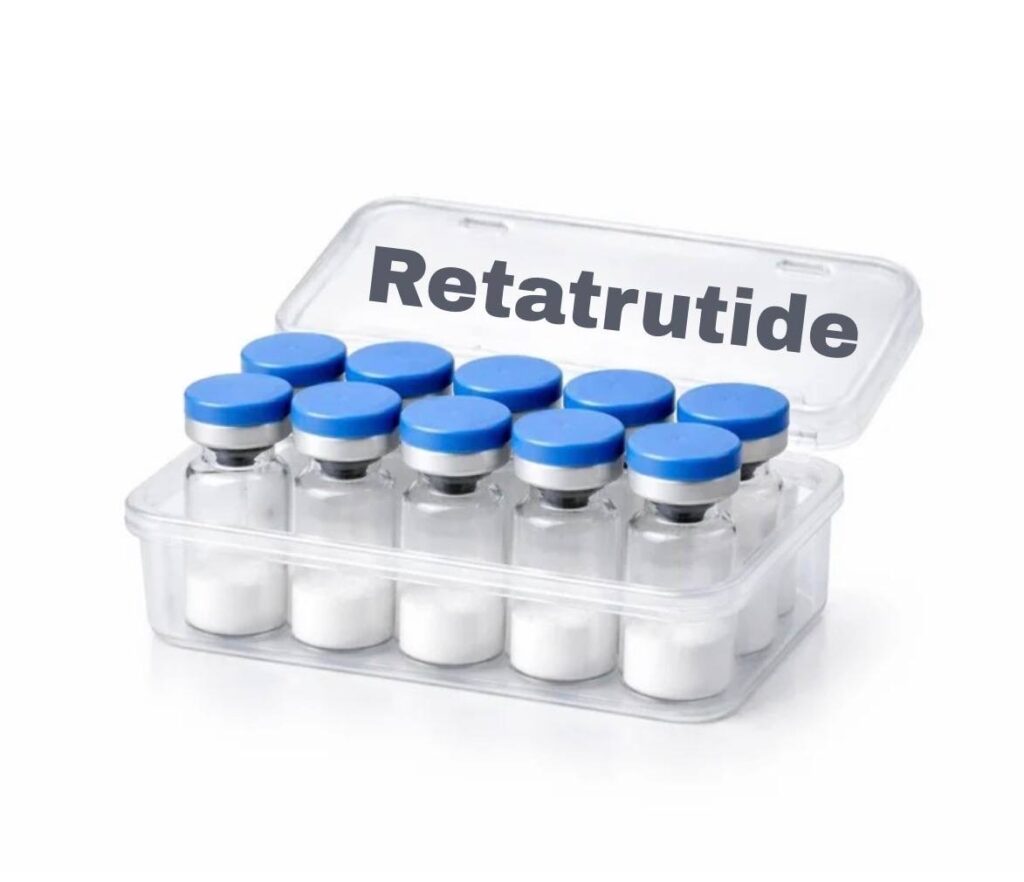
Buy Retatrutide Peptide | Proven Triple GLP-1/GIP/Glucagon Receptor Agonist | PrimaLab Peptide
Retatrutide (LY3437943) is a synthetic triple receptor agonist research peptide developed by Eli Lilly, simultaneously targeting three key metabolic receptors: the GLP-1 receptor (GLP-1R), the GIP receptor (GIPR), and the glucagon receptor (GcgR). Researchers who buy Retatrutide peptide use it to investigate the combined pharmacology of triple incretin/glucagon receptor co-activation, the specific contribution of glucagon receptor engagement to the metabolic effects of dual GIP/GLP-1R agonism, energy expenditure regulation through glucagon receptor pathways, hepatic glucose and lipid metabolism, and systematic comparison with single-receptor, dual-receptor, and triple-receptor agonist research tools in PrimaLab Peptide’s metabolic catalog.
PrimaLab Peptide supplies research-grade Retatrutide at ≥99% purity, independently verified by Janoshik Analytical via HPLC and mass spectrometry, with a full batch-specific Certificate of Analysis included with every order.
What Is Retatrutide?
Retatrutide is a 39-amino acid synthetic peptide with the complete sequence:
His-Aib-Glu-Gly-Thr-Phe-Thr-Ser-Asp-Tyr-Ser-Ile-Aib-Leu-Asp-Lys(C18 fatty diacid)-Ala-Ala-Arg-Asp-Phe-Val-Ala-Trp-Leu-Ile-Ala-Gly-Gly-Pro-Ser-Ser-Gly-Ala-Pro-Pro-Pro-Ser-NH₂
CAS: 2381910-47-8 | Molecular formula: C₂₂₂H₃₅₆N₅₄O₇₀ | MW: ~4891 Da
Key structural features relevant to research:
- Triple receptor activation: Retatrutide simultaneously activates GLP-1R, GIPR, and GcgR — making it the only compound in PrimaLab Peptide’s metabolic catalog to engage all three of these key metabolic GPCRs. This triple mechanism is the defining pharmacological characteristic distinguishing Retatrutide from all other metabolic research peptides in the catalog
- Aib substitutions: Two Aib (alpha-aminoisobutyric acid) residues at positions 2 and 13 confer DPP-IV resistance and structural rigidity — improving metabolic stability in research systems
- C18 fatty diacid acylation at Lys16: A C18 fatty diacid chain enables albumin binding for extended half-life — similar to the acylation strategy used by Semaglutide and Tirzepatide, but positioned at Lys16 rather than Lys26
- First described 2022–2023: Retatrutide is one of the most recently developed compounds in the triple agonist research space, with peer-reviewed literature emerging from approximately 2022–2023
A comprehensive review of triple receptor agonist pharmacology and the growing GLP-1/GIP/glucagon agonist research field is available through published PubMed research on Retatrutide and the NIH review of multi-receptor incretin agonism.
Retatrutide Research Applications
Retatrutide’s triple receptor mechanism positions it as the most pharmacologically comprehensive metabolic receptor agonist research tool in PrimaLab Peptide’s catalog — and makes it uniquely valuable for research specifically requiring simultaneous GLP-1R, GIPR, and GcgR co-activation:
- Triple receptor co-activation pharmacology research: The primary research application — studying the downstream signalling consequences of simultaneous GLP-1R, GIPR, and GcgR activation in cell culture and research model systems. Research examines whether triple receptor co-activation produces additive, synergistic, or antagonistic effects compared to dual or single receptor agonism
- Glucagon receptor (GcgR) contribution research: Retatrutide adds GcgR engagement to the GIP/GLP-1R dual agonism of Tirzepatide. By comparing Tirzepatide and Retatrutide research outcomes, researchers can isolate the specific metabolic contribution of glucagon receptor activation — particularly its effects on hepatic glucose production, fatty acid oxidation, and energy expenditure
- Energy expenditure research: Glucagon receptor activation stimulates thermogenesis and energy expenditure through brown adipose tissue activation and hepatic fatty acid oxidation. Retatrutide research examines whether GcgR engagement in the triple agonist context produces additive energy expenditure effects beyond dual GIP/GLP-1R agonism
- Hepatic metabolism research: GcgR activation increases hepatic glucose production and fatty acid oxidation — in the context of concurrent GLP-1R and GIPR insulin secretion stimulation, the net hepatic metabolic balance of triple receptor co-activation is a key research question examined with Retatrutide
- Adipose tissue metabolism research: Retatrutide research has examined effects on adipose tissue biology through both GIPR (expressed in adipocytes) and GcgR (mediates lipolysis in adipose tissue) engagement, alongside GLP-1R-mediated appetite suppression
- Systematic multi-receptor agonist research: Retatrutide is the essential capstone compound for systematic multi-receptor agonist comparison research — comparing its triple agonism against Semaglutide (GLP-1R only), Tirzepatide (GIP+GLP-1R), and Mazdutide (GLP-1R+GcgR) to dissect individual and combined receptor pathway contributions to metabolic research outcomes. This systematic approach requires the full panel of metabolic agonists available from PrimaLab Peptide’s Metabolic Peptides category
What Makes Retatrutide Different From Other GLP-1 Research Peptides
Understanding Retatrutide’s position in the metabolic agonist landscape is essential for appropriate research design:
- Semaglutide: Single GLP-1R agonist — the reference baseline. GLP-1R only
- Tirzepatide: Dual GIPR + GLP-1R agonist. Adds GIP receptor engagement to GLP-1R
- Mazdutide: Dual GLP-1R + GcgR agonist. Adds glucagon receptor to GLP-1R (different second receptor from Tirzepatide)
- Retatrutide (this product): Triple GLP-1R + GIPR + GcgR agonist. Engages all three simultaneously — the full combination of what Tirzepatide and Mazdutide each achieve individually, combined in one compound
- Cagri+Sema Blend: Amylin receptor + GLP-1R — distinct from the incretin/glucagon receptor panel above, adding a completely different receptor class (amylin/calcitonin receptors)
Purity & Third-Party Testing
Every batch of Retatrutide supplied by PrimaLab Peptide is independently tested by Janoshik Analytical:
- HPLC — quantitative purity confirmed at ≥99%
- Mass Spectrometry — molecular identity and MW verification (~4891 Da, CAS: 2381910-47-8), confirming the 39-amino acid sequence, dual Aib substitutions, and C18 acylation at Lys16
Each new batch may vary slightly in exact purity — always check the batch-specific COA attached to your order, not a previously published figure. The COA is available on request and included with every order. Purity can be verified on the Janoshik portal using your batch number.
Storage & Reconstitution
- Sealed (lyophilized): Store at −20°C, away from light and humidity. Stable for up to 24 months sealed
- After reconstitution: Store at 2–8°C and use within 28 days. Do not freeze after reconstitution
- Reconstitution: Use Bacteriostatic Water (BAC Water). BAC Water extends usable life to 28 days vs. approximately 72 hours for sterile water alone. The C18 acylation may slow initial dissolution — add slowly, swirl gently, and allow adequate dissolution time. Do not shake or vortex
- Freeze-thaw cycles: Avoid after reconstitution — each cycle degrades peptide integrity. Aliquot before freezing if your protocol requires multiple experiments
- Sterile technique: Standard aseptic lab protocols apply throughout reconstitution and handling
Product Specifications
| Full Name | Retatrutide (LY3437943) |
| CAS Number | 2381910-47-8 |
| Receptor Targets | GLP-1R, GIPR, GcgR (glucagon receptor) — triple agonist |
| Sequence | His-Aib-Glu-Gly-Thr-Phe-Thr-Ser-Asp-Tyr-Ser-Ile-Aib-Leu-Asp-Lys(C18 fatty diacid)-Ala-Ala-Arg-Asp-Phe-Val-Ala-Trp-Leu-Ile-Ala-Gly-Gly-Pro-Ser-Ser-Gly-Ala-Pro-Pro-Pro-Ser-NH₂ |
| Molecular Formula | C₂₂₂H₃₅₆N₅₄O₇₀ |
| Molecular Weight | ~4891 Da |
| Purity | ≥99% (Janoshik HPLC + Mass Spectrometry verified) |
| Appearance | White lyophilized powder |
| Form | Lyophilized powder — synthetic, non-animal origin |
| Available Sizes | 2mg, 5mg, 10mg |
| Storage (sealed) | −20°C, up to 24 months |
| Storage (reconstituted) | 2–8°C, use within 28 days |
| Reconstitution | Bacteriostatic Water (BAC Water) |
| Testing Lab | Janoshik Analytical (independent third-party) |
| COA | Batch-specific — available on request, included with every order |
| Intended Use | In vitro laboratory research only |
Frequently Asked Questions — Retatrutide Peptide
What is Retatrutide used for in research?
Researchers who buy Retatrutide peptide use it to investigate triple GLP-1R/GIPR/GcgR co-activation pharmacology, the specific contribution of glucagon receptor engagement to dual GIP/GLP-1R agonism (by comparison with Tirzepatide), energy expenditure and thermogenesis through GcgR pathways, hepatic glucose and lipid metabolism in triple receptor activation contexts, adipose tissue biology through combined GIPR and GcgR engagement, and systematic multi-receptor agonist comparative research. Published literature is available on PubMed.
What is the key difference between Retatrutide and Tirzepatide?
Both are multi-receptor agonists but Tirzepatide targets only GIP receptor + GLP-1R (dual agonist), while Retatrutide adds glucagon receptor (GcgR) engagement to produce a triple receptor activation profile. By comparing Tirzepatide and Retatrutide in parallel research designs, researchers can isolate the specific metabolic contribution of GcgR activation — particularly for energy expenditure, hepatic glucose production, and fatty acid oxidation mechanisms — from the GIP/GLP-1R dual agonism common to both compounds.
Why is BAC Water preferred over sterile water for Retatrutide reconstitution?
Bacteriostatic Water (BAC Water) contains 0.9% benzyl alcohol which inhibits bacterial growth in the reconstituted peptide solution, allowing multiple draws from the same vial over a 28-day research period without microbial contamination. Sterile water provides no bacteriostatic protection and should only be used for single-session immediate use, as the reconstituted solution remains usable for only approximately 72 hours. BAC Water is the appropriate choice for any multi-use research protocol.
Is Retatrutide from PrimaLab Peptide independently tested?
Yes. Every batch is independently verified by Janoshik Analytical at ≥99% purity via HPLC and mass spectrometry identity confirmation (MW: ~4891 Da, CAS: 2381910-47-8). The batch-specific COA is available on request and included with every order. Purity can be verified independently on the Janoshik portal using the batch number from your vial. Batch-to-batch purity may vary slightly — always check the COA for your specific order.
How does Retatrutide compare to Mazdutide for GcgR research?
Mazdutide is a dual GLP-1R + GcgR agonist — it combines glucagon receptor engagement with GLP-1R activation without GIPR involvement. Retatrutide adds GIPR engagement to this GLP-1R/GcgR combination, creating a triple agonist. For research specifically examining GcgR contributions in the context of GLP-1R agonism alone (without GIP receptor), Mazdutide is the appropriate tool. For research examining GcgR in the context of full GLP-1R + GIPR co-activation, Retatrutide is required.
Is this product suitable for human or veterinary research use?
No. Retatrutide from PrimaLab Peptide is supplied exclusively for in vitro laboratory research. It is not approved by the FDA or any regulatory authority for human or veterinary use. It is not for consumption, use in food, drugs, or medical devices. Qualified laboratory researchers and licensed institutions conducting legitimate in vitro research are the intended buyers. Researchers are responsible for compliance with all applicable local regulations.
Related Research Peptides
Researchers buying Retatrutide peptide for triple receptor and metabolic research frequently explore:
- Semaglutide — single GLP-1R agonist reference baseline for comparative research
- Tirzepatide — dual GIP/GLP-1R agonist for comparative dual receptor research
- Mazdutide — dual GLP-1R/GcgR agonist for GcgR contribution isolation research
- Cagrilitide — long-acting amylin analogue for complementary amylin/GLP-1R research
- Cagri+Sema Blend — dual amylin/GLP-1R research stack
- AOD9604 — modified GH fragment for complementary fat metabolism research
Browse our complete Metabolic Peptides category. Bulk researchers can apply for discounted rates through our Wholesale Portal. Reconstitute with BAC Water, available in our Accessories & Reconstitution Supplies section.
⚠️ For in vitro laboratory research only. Not for human consumption. Not for use in food, drugs, or medical devices. Not for veterinary use without proper licensing. Researchers are solely responsible for compliance with all applicable regulations. Keep out of reach of children. Handle following standard lab safety protocols for peptide compounds.
Reviews
There are no reviews yet.