
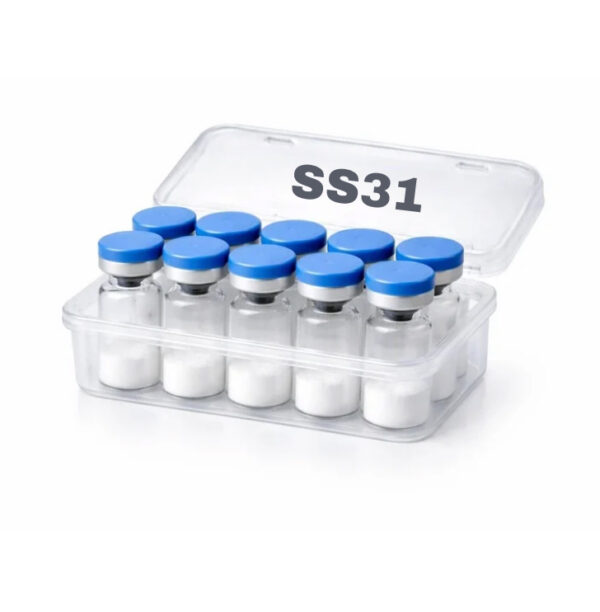
Buy SS-31 Elamipretide | Trusted Cardiolipin-Binding Mitochondrial Research Tetrapeptide | PrimaLab Peptide
SS-31 (Elamipretide) is a synthetic tetrapeptide and one of the most extensively studied mitochondria-targeted research compounds in peptide science. Developed by Dr. Hazel Szeto and Dr. Peter Schiller at Cornell University — hence the “SS” (Szeto-Schiller) designation — SS-31 was specifically engineered with alternating cationic and aromatic residues that enable selective binding to cardiolipin, a phospholipid found almost exclusively in the inner mitochondrial membrane.
Researchers who buy SS-31 Elamipretide use it to investigate cardiolipin biology, mitochondrial membrane integrity, reactive oxygen species (ROS) management, ATP production in compromised mitochondria, ischemia-reperfusion mechanisms, and mitochondrial protective pathways in in vitro and in vivo research models. PrimaLab Peptide supplies research-grade SS-31 at ≥99.2% purity, independently verified by Janoshik Analytical via HPLC and LC-MS, with a full batch-specific Certificate of Analysis included with every order.
What Is SS-31 (Elamipretide)?
SS-31 is a synthetic tetrapeptide with the sequence D-Arg–Dmt–Lys–Phe–NH₂, where Dmt represents the non-natural amino acid 2′,6′-dimethyltyrosine. The compound carries several synonymous designations in the published literature: SS-31 (Szeto-Schiller 31, reflecting its position in a numbered series of related compounds), Elamipretide (its INN), MTP-131 (Mitochondria-Targeting Peptide 131), and Bendavia (its clinical development name). These are all the same compound — researchers should verify which name is used in the specific publications they are referencing.
The structural design of SS-31 is mechanistically intentional: the alternating cationic (D-Arg, Lys) and aromatic (Dmt, Phe) residues create an amphipathic pattern that enables high-affinity binding to cardiolipin’s characteristic tetra-acyl phospholipid head group. Cardiolipin is almost exclusively localised to the inner mitochondrial membrane, making this binding selectivity the basis for SS-31’s mitochondrial targeting without requiring any mitochondria-specific transport sequences. A comprehensive overview of SS-31’s mechanism and cardiolipin biology is available through NIH-published research on SS-31 and cardiolipin.
Key structural and pharmacological features relevant to research:
- Molecular formula: C₃₂H₄₉N₉O₅ | MW: 639.8 g/mol | CAS: 736992-21-5 | PubChem CID: 11764719
- Dmt residue light sensitivity: The dimethyltyrosine (Dmt) residue at position 2 is an aromatic residue sensitive to UV exposure — protect from direct light during reconstitution and storage
- Cell-permeable tetrapeptide: SS-31’s small size and amphipathic design enable cell permeability and direct mitochondrial membrane access without requiring specific transporters
SS-31 Research Background — One of the Strongest Profiles in Its Class
SS-31 has one of the strongest and most diverse research profiles of any mitochondria-targeted research peptide, spanning from in vitro cardiolipin binding characterisation through to Phase 2 and Phase 3 human clinical trials — making it a reference compound for the broader field of mitochondria-targeted research. Key research milestones include:
- Cardiolipin binding mechanism: Foundational research established SS-31’s selective binding to cardiolipin on the inner mitochondrial membrane, demonstrating its concentration at this specific subcellular location and its stabilising effects on cristae membrane structure
- Electron transport chain research: Studies have examined SS-31’s effects on stabilising electron transport chain (ETC) complexes — particularly Complex I, Complex III, and cytochrome c — reducing electron leak and ROS production while supporting ATP synthesis efficiency
- Ischemia-reperfusion research: Multiple published in vivo animal studies examined SS-31 in kidney and cardiac ischemia-reperfusion injury models, studying its effects on mitochondrial morphology recovery, ATP restoration, and tissue injury biomarkers
- Neuroscience research models: Research in rodent models has examined SS-31’s effects on mitochondrial function in hippocampal tissue, experimental glaucoma models, and neurodegenerative disease-relevant research systems
- Clinical trial history: SS-31 (as Elamipretide/Bendavia) advanced into Phase 2 and Phase 3 human clinical trials — the primary investigated indications were mitochondrial myopathy and cardiovascular/kidney disease. It received FDA Orphan Drug Designation and European Medicines Agency Orphan Designation for mitochondrial myopathy, recognising the unmet medical need in this rare disease. Phase 3 expectations in mitochondrial myopathy were not met as of 2020; research in other clinical areas continued. SS-31 remains one of the only mitochondria-targeted peptides with published human clinical data — making it the key reference compound for translational mitochondrial research
The full published research literature on SS-31 is available through PubMed research on SS-31 and Elamipretide.
SS-31 Research Applications
SS-31’s selective cardiolipin binding and inner mitochondrial membrane concentration make it a versatile research tool across multiple research disciplines:
- Cardiolipin biology research: SS-31 is the primary research tool for studying cardiolipin’s roles in ETC organisation, cristae morphology maintenance, cytochrome c binding, and apoptosis regulation — providing a pharmacological approach to cardiolipin function research
- Mitochondrial ROS research: Studies have examined SS-31’s effects on mitochondrial superoxide and hydrogen peroxide production, exploring how cardiolipin stabilisation reduces electron leak from the ETC
- ATP production research: Research has studied SS-31’s effects on ATP synthesis efficiency in mitochondria under various stress conditions, including models of oxidative stress, nutrient deprivation, and ischemia-reperfusion
- Mitochondrial morphology research: Studies have examined SS-31’s effects on mitochondrial cristae structure, fusion/fission dynamics, and mitochondrial network morphology in cell culture research
- Cardiac and renal research models: SS-31 has been studied in cardiac and renal ischemia-reperfusion research models, heart failure models, and chronic kidney disease models in animal research
- Skeletal muscle mitochondrial research: Research has examined SS-31’s effects on mitochondrial function in skeletal muscle research models relevant to exercise biology and sarcopenia research
- Longevity and aging research: SS-31 is studied in the context of age-associated mitochondrial decline, frequently used alongside longevity-focused compounds including NAD+, Epitalon, MOTS-c, and Glutathione in comprehensive cellular aging and longevity research programs
Purity & Third-Party Testing
Every batch of SS-31 supplied by PrimaLab Peptide is independently tested by Janoshik Analytical — an independent analytical laboratory with no commercial interest in the result:
- HPLC — quantitative purity confirmed at ≥99.2% — meaning less than 1% of the material is anything other than SS-31
- LC-MS (Liquid Chromatography-Mass Spectrometry) — molecular identity confirmation (MW: 639.8 g/mol, CAS: 736992-21-5), verifying both the correct tetrapeptide sequence and the non-natural Dmt residue at position 2
LC-MS identity verification is particularly important for SS-31 because of the non-natural Dmt residue — standard amino acid analysis cannot distinguish Dmt from tyrosine, making mass spectrometry the definitive identity confirmation method. The batch-specific COA shows both purity and identity data in a single verifiable document, included with every order.
Storage & Reconstitution
- Long-term storage (sealed, lyophilized): −20°C, away from light. SS-31 is shipped as white lyophilized powder and is stable during short transit at ambient temperature — refrigerate or freeze immediately on arrival
- Short-term storage (lyophilized): 2–8°C is acceptable for days to a couple of weeks with minimal repeated access
- Light protection: The Dmt (dimethyltyrosine) aromatic residue is sensitive to UV — protect from direct light during reconstitution and storage
- After reconstitution: Use sterile water or your research buffer of choice. Reconstitute only the volume needed for immediate use. Store reconstituted solution at 2–8°C and use promptly — or aliquot and freeze at −20°C for longer storage
- Reconstitution technique: Add sterile water slowly and gently swirl — do not shake or vortex. SS-31 is generally readily soluble in aqueous buffers given its cationic character
- Freeze-thaw cycles: Avoid repeated freeze-thaw of reconstituted solution — each cycle introduces moisture stress and risks Dmt oxidation. Aliquot before freezing if multiple uses are planned
Product Specifications
| Full Name | Szeto-Schiller Peptide 31 (Elamipretide) |
| Synonyms | SS-31, MTP-131, Bendavia, Elamipretide |
| Sequence | D-Arg–Dmt–Lys–Phe–NH₂ |
| Molecular Formula | C₃₂H₄₉N₉O₅ |
| Molecular Weight | 639.8 g/mol |
| CAS Number | 736992-21-5 |
| PubChem CID | 11764719 |
| Purity | ≥99.2% (Janoshik HPLC + LC-MS verified) |
| Form | Lyophilized white powder |
| Available Sizes | 10mg, 50mg |
| Storage (long-term) | −20°C, away from light |
| Storage (short-term) | 2–8°C for days to weeks |
| Reconstitution | Sterile water or research buffer of choice |
| Light Sensitivity | Protect from UV — Dmt residue sensitive |
| Testing Lab | Janoshik Analytical (independent third-party) |
| COA | Batch-specific — included with every order |
| Intended Use | In vitro / in vivo laboratory research only |
Frequently Asked Questions — SS-31 Elamipretide
What is SS-31 Elamipretide used for in research?
Researchers who buy SS-31 Elamipretide use it to investigate cardiolipin biology and inner mitochondrial membrane structure, electron transport chain stabilisation and ROS reduction, ATP synthesis efficiency in stressed mitochondria, ischemia-reperfusion injury mechanisms in cardiac and renal research models, skeletal muscle mitochondrial function, neurological mitochondrial research, and age-associated mitochondrial decline. Its unique status as the only mitochondria-targeted peptide with published Phase 2/3 clinical trial data makes it the reference compound for translational mitochondrial research. Fully published literature is available on PubMed.
Why does SS-31 selectively target mitochondria?
SS-31’s mitochondrial selectivity arises from its structural design rather than a specific transport sequence. The alternating cationic (D-Arg, Lys) and aromatic (Dmt, Phe) residues create an amphipathic pattern with high binding affinity for cardiolipin, a phospholipid with a distinctive tetra-acyl structure found almost exclusively in the inner mitochondrial membrane. This selective cardiolipin binding concentrates SS-31 at the inner mitochondrial membrane specifically, giving it functional access to ETC complexes and cardiolipin-dependent mitochondrial processes without requiring mitochondria-specific transport proteins.
Why does the Dmt residue matter, and why is LC-MS important for SS-31 verification?
The 2′,6′-dimethyltyrosine (Dmt) at position 2 of SS-31 is a non-natural amino acid that contributes both to cardiolipin binding affinity and to the compound’s metabolic stability and antioxidant activity. It is also UV-sensitive — requiring light protection during handling. From an analytical standpoint, Dmt cannot be distinguished from tyrosine by standard amino acid analysis, making mass spectrometry the definitive identity confirmation method. Janoshik’s LC-MS verification confirms the correct MW (639.8 g/mol) which matches the Dmt-containing sequence rather than a Tyr-substituted analogue (which would show a different MW), providing robust identity confirmation beyond HPLC purity alone.
What is SS-31’s clinical trial history, and what does it mean for research?
SS-31 (as Elamipretide/Bendavia) progressed further into human clinical development than almost any other mitochondria-targeted research peptide — reaching Phase 2 and Phase 3 trials for mitochondrial myopathy and cardiovascular/kidney disease indications. It received FDA and EMA Orphan Drug Designation for mitochondrial myopathy. Phase 3 primary endpoints for mitochondrial myopathy were not met as of 2020, and research in other areas continued. For researchers, this clinical history means SS-31 has published human pharmacokinetic, safety, and translational data available — making it the essential reference standard for any new mitochondria-targeted research compound and the most clinically contextualised mitochondrial peptide available for preclinical research design.
What compounds are commonly studied alongside SS-31 in longevity and mitochondrial research?
Researchers buying SS-31 Elamipretide for mitochondrial and longevity research frequently explore complementary compounds from PrimaLab Peptide’s Wellness & Longevity category, including NAD+ (cellular energy metabolism and sirtuin activation), MOTS-c (mitochondria-derived AMPK activation peptide), Epitalon (telomerase and longevity research), and Glutathione (master antioxidant and redox balance). Browse the complete Wellness & Longevity category.
Is SS-31 from PrimaLab Peptide independently tested?
Yes. Every batch is independently verified by Janoshik Analytical — an independent laboratory with no commercial interest in the result — at ≥99.2% purity via HPLC and LC-MS identity confirmation (MW: 639.8 g/mol, CAS: 736992-21-5). The batch-specific COA includes both purity and identity data and is included with every order. Unlike in-house supplier testing, Janoshik’s independent analysis provides unbiased verification that researchers can cite in their research documentation.
Related Research Compounds
Researchers buying SS-31 Elamipretide for mitochondrial and longevity research frequently explore:
- NAD+ (Nicotinamide Adenine Dinucleotide) — cellular energy coenzyme for sirtuin activation, DNA repair, and ETC research
- MOTS-c — mitochondria-derived peptide for AMPK activation and metabolic regulation research
- Epitalon — AEDG tetrapeptide for telomerase activation and longevity pathway research
- Glutathione (GSH) — master antioxidant for redox balance and mitochondrial protection research
- Thymosin Alpha-1 — an immunomodulatory peptide for immune function and cellular health research
Browse our complete Wellness & Longevity and Healing & Repair Peptides categories. Bulk researchers can apply for discounted rates through our Wholesale Portal.
⚠️ For in-vitro and in-vivo laboratory research use only. Not intended for human or veterinary consumption. Not a drug, supplement, or medical treatment. Researchers are solely responsible for compliance with all applicable local, national, and international regulations governing the purchase, storage, and use of research compounds.


Reviews
There are no reviews yet.