
Buy Glutathione Research Grade | Superior Purity GSH Tripeptide | PrimaLab Peptide
Glutathione (GSH) is one of the most extensively studied antioxidant molecules in biochemical and cellular research, and one of the most important tripeptides in human physiology. Researchers who buy glutathione research grade use it to investigate redox signalling, cellular detoxification pathways, oxidative stress mechanisms, immune function biology, and aging-related cellular decline. PrimaLab Peptide supplies research-grade Glutathione at 99.36% purity — independently verified by Janoshik Analytical via HPLC and mass spectrometry — with a full batch-specific Certificate of Analysis available with every order.
What Is Glutathione (GSH)?
Glutathione (GSH) is a naturally occurring tripeptide with the amino acid sequence γ-Glu-Cys-Gly (gamma-glutamylcysteinylglycine) and the molecular formula C₁₀H₁₇N₃O₆S. With a molecular weight of 307.32 g/mol and CAS number 70-18-8, it is one of the most comprehensively characterised small molecules in biochemistry. Glutathione is found in virtually every mammalian cell, where it exists primarily in its reduced form (GSH) — the biologically active antioxidant form — and its oxidised disulfide form (GSSG).
Often referred to in the scientific literature as the body’s “master antioxidant,” Glutathione occupies a central position in cellular redox homeostasis. Its unique structure — particularly the gamma-peptide bond between glutamate and cysteine — confers resistance to standard peptidase degradation, allowing it to maintain high intracellular concentrations. A comprehensive overview of Glutathione’s biochemistry and physiological roles is available in the NIH-published review of glutathione in cellular metabolism.
Glutathione Research Applications
Glutathione’s central role in cellular redox biology makes it one of the most versatile and widely used compounds in biochemical research. Published studies available on PubMed have examined Glutathione (GSH) across a broad range of research contexts:
- Redox signalling research: GSH is the primary intracellular reductant and electron donor in redox signalling cascades, making it essential for research into cellular oxidation-reduction balance and thiol-dependent signalling pathways
- Cellular detoxification studies: Glutathione S-transferases (GSTs) conjugate GSH to electrophilic xenobiotics, reactive metabolites, and heavy metals, facilitating their detoxification and excretion. GSH is therefore central to toxicology research and drug metabolism studies
- Oxidative stress and antioxidant defence research: GSH directly neutralises reactive oxygen species (ROS) and reactive nitrogen species (RNS), and serves as the electron donor for glutathione peroxidase (GPx) enzymes in the enzymatic antioxidant defence system
- Immune function research: Glutathione supports lymphocyte proliferation, T-cell activation, and natural killer (NK) cell activity. Research has examined GSH depletion in immune dysfunction models
- Mitochondrial protection studies: Mitochondrial GSH (mGSH) represents a critical pool of antioxidant defence within the inner mitochondrial membrane — frequently studied alongside mitochondria-targeted compounds such as SS-31 (Elamipretide) and NAD+
- Aging and longevity research: GSH levels decline with age in most tissues, making glutathione depletion a studied biomarker of cellular ageing. Researchers investigating longevity pathways frequently use GSH alongside NAD+, Epitalon, and SS-31 in cellular protection research programs
- Melanin synthesis research: GSH has been studied for its effects on melanogenesis pathways and tyrosinase enzyme activity in skin biology research models
Glutathione is a cornerstone compound in our Wellness & Longevity research category, complementing related longevity and cellular health compounds including NAD+, SS-31 (Elamipretide), Epitalon, and MOTS-c.
Purity & Third-Party Testing
In biochemical research, purity is not a marketing consideration — it is a scientific requirement. A contaminated or low-purity Glutathione sample introduces confounds into redox assays, detoxification studies, and any experiment where GSH concentration directly affects the outcome. PrimaLab Peptide supplies research-grade Glutathione with independent purity verification through Janoshik Analytical.
Our current batch of Glutathione (GSH) tests at 99.36% purity, confirmed by:
- HPLC (High-Performance Liquid Chromatography) — quantitative purity determination
- Mass Spectrometry — molecular identity confirmation (MW 307.32 g/mol, CAS 70-18-8)
The Janoshik COA for the current batch is available on request. This is a verifiable third-party lab result — not a supplier-generated purity claim. Researchers can confirm the batch data independently before ordering. Every batch we stock is tested before dispatch — we do not batch-swap without notice or publish unverified numbers.
Form, Storage & Reconstitution
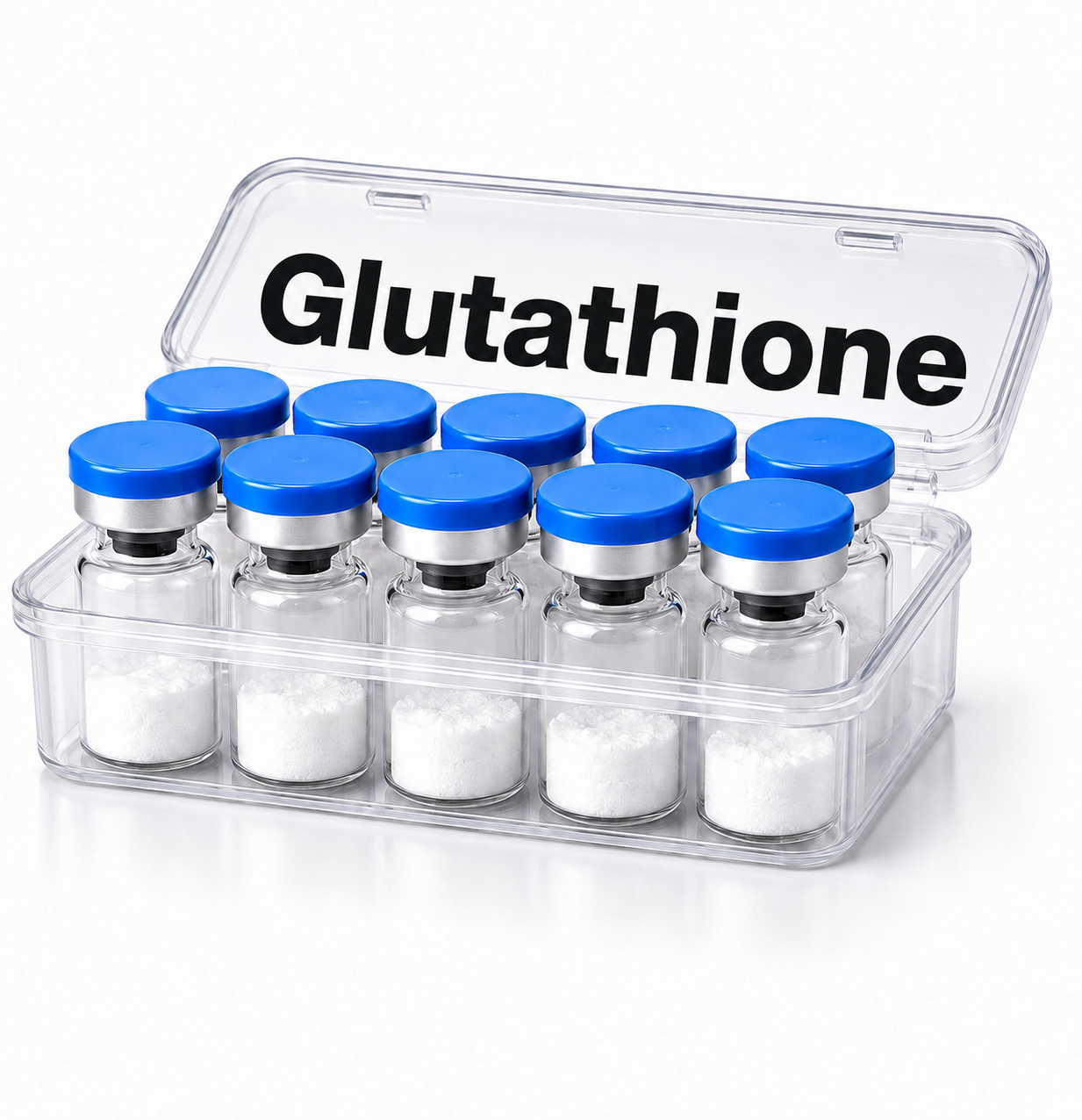
PrimaLab Peptide supplies research-grade Glutathione as a lyophilized (freeze-dried) white powder. Lyophilized form is the preferred format for research-grade GSH because peptides and small molecules in aqueous solution degrade significantly faster than in dry powder form — particularly compounds with free thiol groups like Glutathione, which are susceptible to oxidation in solution.
Storage guidelines:
- Sealed (lyophilized): Store at −20°C in a dry, dark environment. Properly stored lyophilized Glutathione remains stable for extended periods
- Light and oxygen: Protect from both — Glutathione’s free thiol group is susceptible to oxidation by light and atmospheric oxygen, which converts active GSH to inactive GSSG
- Freeze-thaw cycles: Avoid repeated freeze-thaw cycles. Aliquot before freezing if your protocol requires multiple uses from the same batch
- After reconstitution: Store at 2–8°C and use promptly. Reconstituted GSH solutions oxidise relatively quickly — minimise exposure to air and light after reconstitution
Reconstitution: Most research protocols reconstitute Glutathione in sterile water or phosphate-buffered saline (PBS), depending on the specific assay requirements. Add solvent slowly and mix gently — do not shake vigorously. For most standard research applications, Bacteriostatic Water (BAC Water) is suitable; however, confirm with your specific protocol requirements. pH consideration is important — GSH is most stable at slightly acidic pH.
Product Specifications
| Product Name | Glutathione (GSH) — Reduced Form |
| Sequence / Formula | γ-Glu-Cys-Gly / C₁₀H₁₇N₃O₆S |
| Molecular Weight | 307.32 g/mol |
| CAS Number | 70-18-8 |
| Purity | 99.36% (Janoshik HPLC + Mass Spectrometry verified) |
| Form | Lyophilized white powder |
| Available Sizes | 600mg, 1500mg |
| Storage | −20°C, dry, dark — protect from light and oxygen |
| Reconstitution | Sterile water or PBS (confirm with protocol) |
| Testing Lab | Janoshik Analytical |
| COA | Available per batch — Janoshik verified |
| Intended Use | In vitro / in vivo laboratory research only |
Frequently Asked Questions — Glutathione Research Grade
What is Glutathione used for in research?
Researchers who buy glutathione research grade use it to investigate redox signalling, cellular detoxification via glutathione S-transferase pathways, oxidative stress and antioxidant defence mechanisms, immune cell function, mitochondrial protection, melanogenesis pathways, and aging-associated GSH depletion. It is one of the most widely used molecules in cell biology and biochemistry research. A broad overview of current Glutathione research can be found in published literature on PubMed.
How pure is PrimaLab Peptide’s Glutathione?
Our current batch tests at 99.36% purity, independently verified by Janoshik Analytical using HPLC and mass spectrometry. This is a verifiable third-party lab result with a batch-specific COA available on request. Researchers can confirm the data independently before ordering.
What is the difference between reduced Glutathione (GSH) and oxidised Glutathione (GSSG)?
Reduced Glutathione (GSH) is the biologically active antioxidant form containing a free thiol (-SH) group that enables its electron-donating activity in redox reactions. Oxidised Glutathione (GSSG) is the inactive disulfide form produced when two GSH molecules donate electrons and bond together. The GSH/GSSG ratio is a standard measure of cellular redox status in research. PrimaLab Peptide supplies Glutathione in the active reduced (GSH) form. Proper storage — particularly protection from oxygen and light — is essential to prevent oxidation of GSH to GSSG during storage.
How should I reconstitute research-grade Glutathione?
Most research protocols reconstitute Glutathione in sterile water or phosphate-buffered saline (PBS) at the concentration required for the specific assay. Add solvent slowly and mix gently — do not shake vigorously as this introduces oxygen and accelerates oxidation. Glutathione is most stable at slightly acidic pH. Use reconstituted solutions promptly and store at 2–8°C, protected from light and air, to minimise oxidative degradation of the active GSH form. For standard laboratory reconstitution, Bacteriostatic Water (BAC Water) is available from PrimaLab Peptide.
What research compounds are commonly studied alongside Glutathione?
Researchers buying glutathione research grade for longevity, cellular protection, and mitochondrial health studies frequently combine it with complementary compounds from PrimaLab Peptide’s Wellness & Longevity category. The most common research combinations include NAD+ (cellular energy metabolism and sirtuin activation), SS-31 (Elamipretide) (mitochondria-targeted cardiolipin stabilisation), Epitalon (telomere and longevity research), and MOTS-c (mitochondrial metabolic signalling peptide).
Why does Glutathione degrade in solution faster than as a powder?
Glutathione’s free thiol (-SH) group is chemically reactive and susceptible to oxidation by dissolved oxygen in aqueous solutions, converting active GSH to inactive GSSG. This process is accelerated by light, heat, and elevated pH. Lyophilized powder form eliminates the aqueous environment, dramatically slowing oxidative degradation and extending shelf life when stored correctly at −20°C in a dry, dark, oxygen-minimised environment. This is why research-grade Glutathione is supplied and stored as lyophilized powder rather than pre-made solution.
Is Glutathione the same as N-Acetyl Cysteine (NAC) in research?
No — though they are related in research contexts. N-Acetyl Cysteine (NAC) is a precursor to cysteine, which is itself a precursor to Glutathione biosynthesis. Researchers sometimes use NAC as an indirect approach to studying GSH pathway upregulation. Research-grade Glutathione (GSH) itself is the direct reduced tripeptide, studied for its direct antioxidant, detoxification, and redox signalling activities rather than as a biosynthetic precursor. The distinction matters for experimental design — see comparative GSH and NAC research on PubMed.
Related Research Compounds
Researchers buying glutathione research grade for cellular protection, longevity, and oxidative stress studies frequently explore the following related compounds from PrimaLab Peptide:
- NAD+ (Nicotinamide Adenine Dinucleotide) — critical coenzyme in cellular energy metabolism, sirtuin activation, and DNA repair research
- SS-31 (Elamipretide) — mitochondria-targeted tetrapeptide studied for cardiolipin stabilisation and mitochondrial ROS reduction
- Epitalon — synthetic tetrapeptide researched for telomerase activation and longevity pathway modulation
- MOTS-c — mitochondria-derived peptide studied for AMPK activation and metabolic regulation
- Lipo-C (LC216) — lipotropic research compound studied for hepatic lipid metabolism and cellular energy pathways
Browse our complete Wellness & Longevity category for the full range of longevity and cellular health research compounds. Bulk researchers and laboratory procurement teams can apply for discounted rates through our Wholesale Portal. Reconstitution supplies including BAC Water are available in our Accessories & Reconstitution Supplies section.
⚠️ For in-vitro and in-vivo laboratory research use only. Not intended for human or veterinary consumption. Must be handled by qualified research professionals in a controlled laboratory environment in accordance with all applicable institutional, ethical, and regulatory guidelines.
Reviews
There are no reviews yet.