
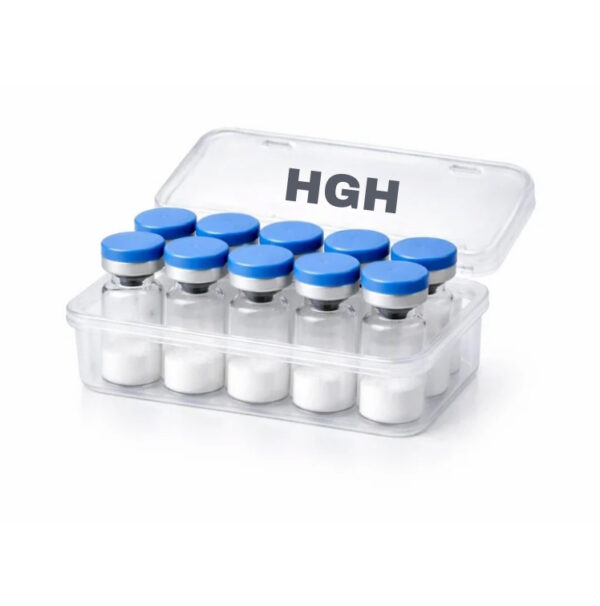
Buy HGH Research Grade | Trusted Recombinant Somatropin for Laboratory Research | PrimaLab Peptide
Human Growth Hormone (HGH / Somatropin) is a 191-amino acid single-chain polypeptide produced endogenously by somatotroph cells in the anterior pituitary gland and is one of the most extensively studied hormones in endocrinology. Researchers who buy HGH research grade use recombinant human growth hormone (rHGH) for GH receptor binding studies, cell biology and receptor signalling research, metabolic pathway analysis, IGF-1 axis research, and as a reference standard in comparative growth hormone peptide studies. PrimaLab Peptide supplies research-grade recombinant HGH at ≥98.5% purity, independently verified by Janoshik Analytical via HPLC and mass spectrometry, cold-chain shipped, with a full batch-specific Certificate of Analysis included with every order.
Important regulatory note: HGH (Somatropin) is a controlled substance in many jurisdictions. Buyers are solely responsible for compliance with all applicable local laws and regulations governing the purchase, possession, and use of recombinant human growth hormone in their jurisdiction. PrimaLab Peptide supplies HGH strictly for legitimate in-vitro laboratory research purposes only.
What Is Recombinant HGH (Somatropin)?
Recombinant human growth hormone (rHGH / Somatropin) is produced using E. coli or mammalian expression systems to synthesise a protein sequence identical to endogenous human pituitary GH. The recombinant form is produced under controlled laboratory conditions with defined purity and characterisation standards, making it a reliable and reproducible research reagent compared to pituitary-extracted preparations.
Key structural features of HGH relevant to research use:
- 191 amino acids — identical sequence to endogenous human GH (CAS: 12629-01-5)
- 22,124 Da molecular weight, the dominant 22kDa isoform; identity confirmed by mass spectrometry, MW matching this value
- 4-helix bundle structure — the characteristic tertiary structure of GH required for GH receptor (GHR) binding
- Two disulfide bonds — Cys53-Cys165 (large loop) and Cys182-Cys189 (small loop), are essential for correct protein folding and GHR binding activity
- E. coli recombinant origin — produced in E. coli expression system; non-glycosylated (endogenous pituitary GH is also non-glycosylated, making E. coli rHGH structurally equivalent for receptor binding research)
Because recombinant HGH binds the GH receptor with the same affinity as native pituitary GH, it is the appropriate reference standard for GH receptor biology research, GHR signalling studies, and as the direct GH axis activation comparator against GHRH analogues such as Sermorelin Acetate, CJC-1295, and Tesamorelin. A comprehensive review of GH biology is available through NIH StatPearls: Growth Hormone.
HGH Research Applications
Recombinant HGH is one of the most widely used protein research reagents in endocrinology and cell biology. Published research on PubMed has examined rHGH across a broad range of research areas:
- GH receptor binding and signalling research: rHGH is the definitive tool for studying GHR (GH receptor) binding kinetics, GHR dimerisation mechanisms, and downstream JAK2/STAT5 signal transduction cascade activation — the primary GH signalling pathway in target tissues
- IGF-1 axis research: GH stimulates IGF-1 production in the liver and peripheral tissues. rHGH is used in cell culture systems to study hepatic IGF-1 production, GH/IGF-1 axis dynamics, and downstream effector mechanisms — frequently studied alongside IGF-1 LR3 for comprehensive GH axis research
- Metabolic signalling research: rHGH has well-characterised metabolic effects in research models, including protein synthesis stimulation, lipolysis activation, and insulin sensitivity modulation — making it a reference compound for studying GH-specific metabolic effects compared to C-terminal fragments such as HGH Fragment 176-191 and AOD9604
- Cell growth and proliferation research: GHR activation in various cell lines produces proliferative and anti-apoptotic signals through PI3K/Akt and MAPK pathways — studied in cell biology and cancer biology research contexts
- Comparative GHRH analogue research: rHGH serves as the downstream reference standard in research comparing different upstream GH secretagogue approaches — Sermorelin Acetate, CJC-1295, Ipamorelin, and Tesamorelin — against direct GHR activation by exogenous rHGH
- Bone biology and growth plate research: GH stimulates chondrocyte proliferation and IGF-1 production in growth plate cartilage — relevant to bone growth and remodelling research models
Critical Handling Note — Protein Stability
HGH is a protein (22,124 Da) rather than a small synthetic peptide — it has more complex three-dimensional structure requirements than small research peptides and requires more careful handling to preserve biological activity:
- Shear sensitivity: HGH is shear-sensitive — vigorous mixing, vortexing, or shaking can denature the protein and disrupt the 4-helix bundle structure essential for GHR binding. Always reconstitute gently and never vortex or shake HGH vials
- Temperature at reconstitution: Allow the sealed lyophilized vial to reach room temperature before opening — this prevents condensation from entering the vial and avoids temperature-shock to the protein
- Reconstitution technique: Inject Bacteriostatic Water slowly down the inside wall of the vial — never inject directly onto the lyophilized protein cake. Allow the protein to dissolve without agitation over 2–5 minutes
- Do not freeze after reconstitution: Reconstituted HGH must not be refrozen. Freeze-thaw cycling causes irreversible protein aggregation and loss of GHR binding activity
- Cloudiness check: Discard reconstituted HGH solution showing cloudiness, particulates, or discolouration — these indicate protein aggregation or contamination
Purity & Third-Party Testing
Every batch of recombinant HGH supplied by PrimaLab Peptide is independently tested by Janoshik Analytical using:
- HPLC — quantitative purity determination confirmed at ≥98.5%
- Mass Spectrometry — molecular identity confirmation (MW: 22,124 Da, CAS: 12629-01-5)
Biological activity (IU potency) is verified separately against international reference standards. All HGH batches are cold-chain shipped to maintain protein integrity during transit. The batch-specific COA is included with every order.
Storage & Reconstitution
- Lyophilized (sealed): Store at −20°C, sealed and light-protected. Cold-chain shipping ensures the protein arrives in intact lyophilized form
- Pre-reconstitution: Allow the sealed vial to reach room temperature before opening
- Reconstitution: Add Bacteriostatic Water slowly down the inside vial wall. Do not shake or vortex — HGH is shear-sensitive. Allow to dissolve without agitation over 2–5 minutes
- Post-reconstitution: Store at 2–8°C. Use within 28 days. Do not refreeze
- Cloudiness: A clear solution is expected. Cloudy, particulate, or discoloured solutions indicate protein aggregation — discard
Product Specifications
| Common Name | HGH · Somatropin · Recombinant Human Growth Hormone |
| CAS Number | 12629-01-5 |
| Origin | Recombinant (E. coli expression system) |
| Amino Acids | 191 aa — identical sequence to endogenous human GH |
| Molecular Weight | 22,124 Da |
| Structure | Single-chain 4-helix bundle · 2 disulfide bonds (Cys53-Cys165, Cys182-Cys189) |
| Purity | ≥98.5% (Janoshik HPLC + Mass Spectrometry) |
| Form | Lyophilized white powder |
| Available Sizes | 10 IU (3.33mg), 100 IU (33.3mg) kit |
| Reconstitution | Bacteriostatic Water — inject slowly down vial wall, do not shake |
| Storage (lyophilized) | −20°C, sealed, light-protected |
| Storage (reconstituted) | 2–8°C, use within 28 days — do not refreeze |
| Shipping | Cold-chain shipped |
| Testing Lab | Janoshik Analytical (independent third-party) |
| COA | Batch-specific — included with every order |
| Regulatory Status | Controlled substance in many jurisdictions — buyers are responsible for local compliance |
| Intended Use | Laboratory research only — not for human use |
Frequently Asked Questions — HGH Research Grade
What is recombinant HGH used for in research?
Researchers who buy HGH research grade use it for GH receptor binding and JAK2/STAT5 signalling research, IGF-1 axis biology studies, metabolic signalling research (protein synthesis, lipolysis, insulin sensitivity), cell growth and proliferation research, bone biology and growth plate research, and as the downstream GHR activation reference standard in comparative studies with upstream GHRH analogues, including Sermorelin Acetate, CJC-1295, and Tesamorelin. Published literature is available on PubMed.
What is the difference between rHGH and GHRH analogues like Sermorelin or CJC-1295?
This is a fundamental research design distinction. rHGH is exogenous growth hormone — it directly activates GH receptors in target tissues, bypassing the pituitary entirely and suppressing endogenous GH production through negative feedback. GHRH analogues like Sermorelin Acetate, CJC-1295, and Tesamorelin act on GHRH receptors in the pituitary to stimulate the pituitary’s own GH production — preserving natural pulsatile patterns and somatostatin feedback. Choose rHGH for direct GHR activation research with defined exogenous GH concentrations; choose GHRH analogues for research requiring intact pituitary-level regulation and physiological GH pulsatility.
Why is HGH shear-sensitive and how does this affect handling?
HGH is a 22,124 Da folded protein with a complex 4-helix bundle tertiary structure. Mechanical shear forces — from shaking, vortexing, or vigorous pipetting — can disrupt the non-covalent interactions maintaining this structure, causing irreversible protein unfolding and aggregation. Aggregated HGH loses GHR binding activity and cannot be used for receptor research. Always reconstitute gently by injecting solvent down the vial wall, swirling slowly, and allowing dissolution without agitation. Never shake or vortex HGH solutions.
Is HGH from PrimaLab Peptide independently tested?
Yes. Every batch is independently verified by Janoshik Analytical at ≥98.5% purity via HPLC and mass spectrometry identity confirmation (MW: 22,124 Da, CAS: 12629-01-5). Biological activity (IU potency) is verified separately against international reference standards. All batches are cold-chain shipped. The batch-specific COA is included with every order.
Is HGH a controlled substance?
Yes — HGH (Somatropin) is classified as a controlled substance in many jurisdictions worldwide, including under the US Anabolic Steroids Control Act and equivalent legislation in other countries. Buyers are solely responsible for verifying and complying with all applicable local laws and regulations governing the purchase, possession, and use of recombinant human growth hormone in their specific jurisdiction before ordering. PrimaLab Peptide supplies HGH strictly for legitimate laboratory research purposes only.
What peptides are commonly studied alongside HGH in GH axis research?
Researchers buying HGH research grade for GH axis studies frequently explore upstream GH axis research compounds from PrimaLab Peptide including Sermorelin Acetate (GHRH(1-29) pituitary stimulation), CJC-1295 (long-acting GHRH analogue), Ipamorelin (selective GHS-R1a agonist), and Tesamorelin (full GHRH analogue) for upstream GH stimulation research, alongside IGF-1 LR3 and HGH Fragment 176-191 for downstream GH axis effector research.
Related Research Peptides
Researchers buying HGH research grade for GH axis and receptor studies frequently explore:
- IGF-1 LR3 — downstream GH axis effector for GH/IGF-1 axis receptor research
- Sermorelin Acetate — GHRH(1-29) for pulsatile GH secretion and pituitary research
- CJC-1295 — long-acting GHRH analogue for sustained GH axis research
- Ipamorelin — selective GHS-R1a agonist for GH frequency modulation research
- Tesamorelin — full GHRH analogue for metabolic and GH axis research
- HGH Fragment 176-191 — C-terminal GH fragment for lipolytic pathway research
Browse our complete Growth Hormone Peptides category. Bulk researchers can apply for discounted rates through our Wholesale Portal. Reconstitute with BAC Water, available in our Accessories & Reconstitution Supplies section.
⚠️ For laboratory research use only. Not intended for human or veterinary use. No medical claims are made or implied. HGH is a controlled substance in many jurisdictions — buyers are solely responsible for compliance with all applicable local laws. Cold-chain shipped. All products are intended exclusively for in-vitro laboratory research.
Reviews
There are no reviews yet.