
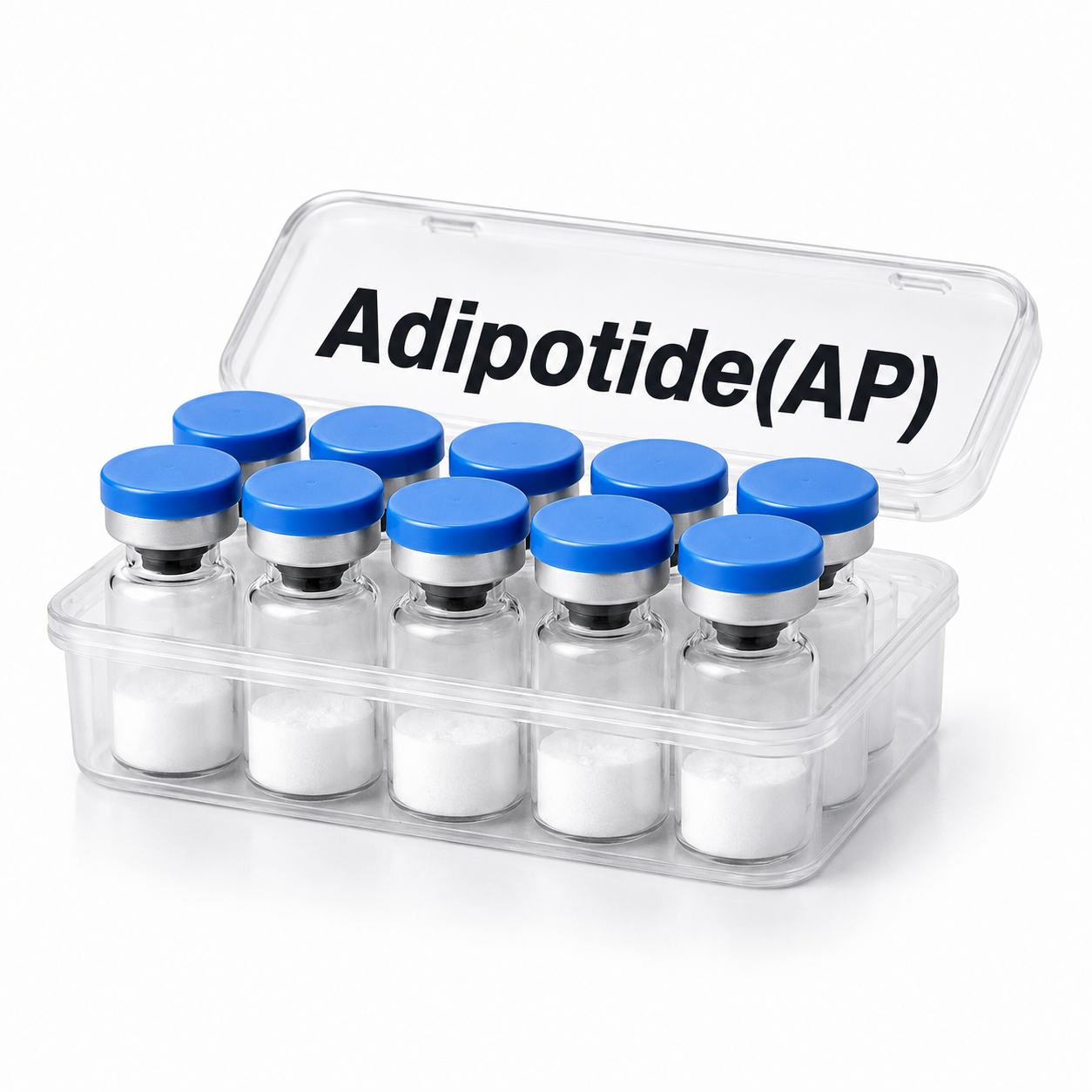
Buy Adipotide FTPP Research Peptide | Proven Dual-Targeting Pro-Apoptotic Peptidomimetic | PrimaLab Peptide
Adipotide (also designated FTPP — Fat-Targeted Pro-apoptotic Peptide) is a chimeric pro-apoptotic peptidomimetic that has attracted significant research interest for its mechanistically unique approach to studying adipose tissue vascular biology. Unlike receptor agonist-based lipolytic research compounds such as AOD9604 or metabolic pathway modulators such as 5-Amino-1MQ, Adipotide operates through a fundamentally distinct dual-targeting mechanism, simultaneously engaging prohibitin and ANXA2 receptors on white adipose tissue vasculature to deliver a pro-apoptotic payload specifically to fat-associated blood vessels.
Researchers who buy Adipotide research peptide use it to investigate selective vascular disruption mechanisms, adipose tissue biology, and targeted apoptosis pathways in preclinical research models. PrimaLab Peptide supplies research-grade Adipotide at 99.36% purity, independently verified by Janoshik Analytical via HPLC and mass spectrometry, with a full batch-specific Certificate of Analysis included with every order.
What Is Adipotide (FTPP)?
Adipotide is a chimeric peptide construct engineered from two functional domains joined by a flexible GG (glycine-glycine) linker, producing a single research compound with two distinct and complementary biological activities in research models:
- Targeting domain (CNGRC): The C-terminal CNGRC sequence binds to CD13 (aminopeptidase N) and ANXA2, receptors that are preferentially expressed on the vasculature of white adipose tissue in research models. This domain directs the compound specifically to fat-associated blood vessels rather than acting systemically
- Pro-apoptotic domain (KLAKLAK)₂: The N-terminal targeting region contains the embedded (KLAKLAK)₂ pro-apoptotic sequence, which disrupts mitochondrial membrane integrity in cells reached by the targeting domain, triggering apoptotic cell death specifically within the targeted fat cell vasculature
- GG linker: The glycine-glycine flexible linker between the two functional domains provides conformational flexibility, allowing each domain to engage its respective target independently without steric interference
The complete amino acid sequence of Adipotide is: KFAKLAARLYRANKA-GG-CNGRC
Molecular formula: C₁₅₃H₂₅₆N₄₆O₃₁S₂ | MW: ~3,320 Da
This chimeric design — a targeting domain fused to a pro-apoptotic effector domain — represents a fundamentally different research approach to adipose tissue biology compared to receptor agonist lipolytic peptides or enzyme-based lipolytic solutions such as Lemon Bottle. A detailed review of prohibitin as a vascular target in adipose tissue is available through published PubMed research on prohibitin targeting, and the original Adipotide research is documented in peer-reviewed publications through the NIH-archived Adipotide preclinical research.
Adipotide Research Mechanism — Dual Receptor Targeting
The research interest in Adipotide centres on its dual receptor-targeting mechanism, which distinguishes it from all other adipose tissue research compounds in the PrimaLab Peptide catalog. Understanding this mechanism is essential for correct research protocol design:
- Prohibitin (PHB): A mitochondrial chaperone protein that is overexpressed on the luminal surface of blood vessels supplying white adipose tissue in research models. Prohibitin serves as the primary vascular address that directs Adipotide to the fat-associated vasculature specifically
- ANXA2 (Annexin A2): A cell surface receptor co-expressed with prohibitin on white adipose tissue vasculature, contributing to the dual-receptor targeting specificity of the CNGRC domain
- CD13 (Aminopeptidase N): An additional receptor engaged by the CNGRC sequence, further specifying tissue targeting in adipose vascular research models
- Mitochondrial disruption: Once the CNGRC targeting domain delivers the compound to the adipose vascular endothelium, the (KLAKLAK)₂ pro-apoptotic sequence disrupts mitochondrial membrane integrity in the targeted cells, triggering the apoptotic cascade locally within the fat-associated vasculature
This mechanism — vascular targeting followed by localised pro-apoptotic delivery — has generated research interest as a model for studying selective tissue-targeted apoptosis and the consequences of adipose vascular disruption on fat tissue biology. All published studies on Adipotide have been conducted in preclinical animal models. No human clinical trials have produced regulatory approval for Adipotide as of 2026. Researchers should design studies accordingly and review the available preclinical literature through PubMed research on Adipotide.
Adipotide vs. Other Lipolytic & Metabolic Research Compounds
Researchers studying adipose tissue biology have access to several mechanistically distinct research tools. Understanding how Adipotide differs from related metabolic research compounds is important for appropriate study design:
- Adipotide (FTPP): Chimeric pro-apoptotic peptidomimetic — vascular targeting + mitochondrial disruption in fat-associated blood vessels. Uniquely targeted mechanism with no receptor agonism
- AOD9604: Modified C-terminal GH fragment studied for receptor-mediated lipolysis activation and lipogenesis inhibition in adipocytes
- HGH Fragment 176-191: C-terminal GH fragment with Cys7-Cys14 disulfide bridge, studied for beta-3 adrenergic receptor-mediated lipolytic activity
- 5-Amino-1MQ: NNMT inhibitor studied for NAD+ pathway modulation and metabolic effects in adipocyte research
- Lemon Bottle: Enzyme-based lipolytic solution using Riboflavin, Lecithin, and Bromelain for a three-stage enzymatic lipolytic cascade
Browse our complete Metabolic Peptides and Wellness & Longevity categories for the full range of adipose tissue and metabolic research compounds.
Purity & Third-Party Testing
Every batch of Adipotide supplied by PrimaLab Peptide is independently tested by Janoshik Analytical using:
- HPLC (High-Performance Liquid Chromatography) — quantitative purity determination confirmed at 99.36%
- Mass Spectrometry — molecular identity and sequence confirmation (MW ~3,320 Da, formula C₁₅₃H₂₅₆N₄₆O₃₁S₂)
The Janoshik COA is included with every order and batch-specific. Mass spectrometry identity confirmation is particularly important for chimeric peptides like Adipotide, where both functional domains must be correctly assembled and the GG linker intact. Third-party testing is a critical starting point — PrimaLab Peptide also recommends that researchers perform their own in-laboratory validation before use in any formal research protocol.
Storage & Reconstitution
Adipotide is supplied as a lyophilized powder for maximum stability during storage and transit.
- Sealed (lyophilized): Store at −20°C, protected from light and moisture. Keep the vial sealed and away from freezer door locations where temperature fluctuations are most pronounced — temperature cycling degrades peptide integrity faster than sustained cold storage
- After reconstitution: Store at 4°C and use within 28 days. Do not repeatedly freeze-thaw reconstituted solution
- Reconstitution solvent: Reconstitute with sterile Bacteriostatic Water (BAC Water) or your preferred research-grade aqueous solvent per your laboratory protocol
- Technique: Add solvent slowly down the inside vial wall — never directly onto the powder. Swirl gently — do not shake or vortex. Allow full dissolution before aliquoting
- Long-term storage: Aliquot reconstituted solution into single-use volumes before freezing if your protocol requires extended storage. This minimises the number of freeze-thaw cycles each aliquot undergoes
Product Specifications
| Common Name | Adipotide / FTPP (Fat-Targeted Pro-apoptotic Peptide) |
| Sequence | KFAKLAARLYRANKA-GG-CNGRC |
| Molecular Formula | C₁₅₃H₂₅₆N₄₆O₃₁S₂ |
| Molecular Weight | ~3,320 Da |
| Purity | 99.36% (Janoshik HPLC + Mass Spectrometry verified) |
| Form | Lyophilized powder |
| Receptor Targets | Prohibitin, ANXA2, CD13 (Aminopeptidase N) |
| Storage (lyophilized) | −20°C, protected from light and moisture |
| Storage (reconstituted) | 4°C, use within 28 days |
| Reconstitution | Bacteriostatic Water (BAC Water) |
| Testing Lab | Janoshik Analytical (independent third-party) |
| COA | Included with every order — batch specific |
| Intended Use | Research and laboratory use only |
Frequently Asked Questions — Adipotide Research Peptide
What is Adipotide used for in research?
Researchers who buy Adipotide research peptide use it to investigate selective vascular disruption mechanisms in white adipose tissue, dual receptor-targeting (prohibitin, ANXA2, CD13) biology, pro-apoptotic peptide delivery mechanisms, and the consequences of adipose vascular apoptosis on fat tissue biology in preclinical research models. It is particularly valuable as a research tool for studying targeted apoptosis strategies in adipose tissue vascular biology. Published preclinical research is available through PubMed and NIH-archived Adipotide publications. All published studies have been conducted in preclinical animal models — no human clinical trials have produced regulatory approval.
How does Adipotide differ from other lipolytic research peptides?
Adipotide’s mechanism is fundamentally distinct from all other lipolytic and metabolic research compounds. While compounds like AOD9604 and HGH Fragment 176-191 act through receptor agonism to stimulate lipolysis in adipocytes, and enzyme-based compounds like Lemon Bottle use enzymatic membrane disruption, Adipotide targets the vasculature supplying white adipose tissue rather than the fat cells themselves. Its pro-apoptotic payload is delivered specifically to prohibitin/ANXA2/CD13-expressing endothelial cells in fat-associated blood vessels, making it a uniquely selective vascular targeting research tool rather than a direct lipolytic agent.
What are the receptor targets of Adipotide?
Adipotide engages three receptor targets through its CNGRC targeting domain: prohibitin (PHB) — a mitochondrial chaperone protein overexpressed on white adipose tissue vasculature; ANXA2 (Annexin A2) — co-expressed with prohibitin on fat-associated vascular endothelium; and CD13 (Aminopeptidase N) — an additional membrane receptor engaged by the CNGRC sequence. This multi-receptor targeting profile contributes to the tissue selectivity observed in preclinical research models. Detailed receptor biology is reviewed in published PubMed literature on prohibitin and ANXA2 in adipose tissue.
Is Adipotide independently tested?
Yes. Every batch is independently verified by Janoshik Analytical at 99.36% purity via HPLC, with mass spectrometry confirmation of molecular identity (MW ~3,320 Da, sequence KFAKLAARLYRANKA-GG-CNGRC). The batch-specific COA is included with every order. For chimeric peptides like Adipotide, mass spectrometry sequence confirmation is particularly critical as it verifies both functional domains and the GG linker are correctly assembled. PrimaLab Peptide also recommends independent laboratory validation before use in formal research protocols.
Have there been human clinical trials for Adipotide?
No. All published research on Adipotide (FTPP) has been conducted in preclinical animal models — most notably non-human primate studies published in peer-reviewed journals. No human clinical trials have produced regulatory approval for Adipotide as of 2026. Researchers should design studies based on available preclinical literature and treat this compound strictly as a research tool for laboratory investigation. Full preclinical research context is available through NIH-archived Adipotide research publications.
What peptides are commonly studied alongside Adipotide?
Researchers buying Adipotide research peptide for adipose tissue and metabolic biology studies frequently explore complementary compounds from PrimaLab Peptide including AOD9604 (receptor-mediated lipolytic activity), HGH Fragment 176-191 (beta-3 adrenergic lipolytic research), 5-Amino-1MQ (NNMT inhibition and NAD+ pathway metabolic research), and Lemon Bottle (enzyme-based lipolytic solution). Browse the full Metabolic Peptides category for all related compounds.
Related Research Peptides
Researchers buying Adipotide research peptide for adipose tissue vascular biology and metabolic research frequently explore:
- AOD9604 — modified HGH C-terminal fragment for receptor-mediated lipolytic pathway research
- HGH Fragment 176-191 — C-terminal GH fragment studied for beta-3 adrenergic lipolysis mechanisms
- 5-Amino-1MQ — NNMT inhibitor studied for NAD+ pathway and adipocyte metabolic research
- Lemon Bottle — enzyme-based lipolytic solution for complementary fat cell biology research
- Lipo-C (LC216) — lipotropic compound for hepatic lipid metabolism research
Browse our complete Metabolic Peptides and Wellness & Longevity categories. Bulk researchers can apply for discounted rates through our Wholesale Portal. Reconstitute with BAC Water, available in our Accessories & Reconstitution Supplies section.
⚠️ For research and laboratory use only. Not intended for human or veterinary use, diagnosis, treatment, or prevention of any condition. No medical claims are made. Researchers are solely responsible for compliance with all applicable local, national, and institutional regulations governing the procurement, storage, and use of research compounds.
Reviews
There are no reviews yet.