
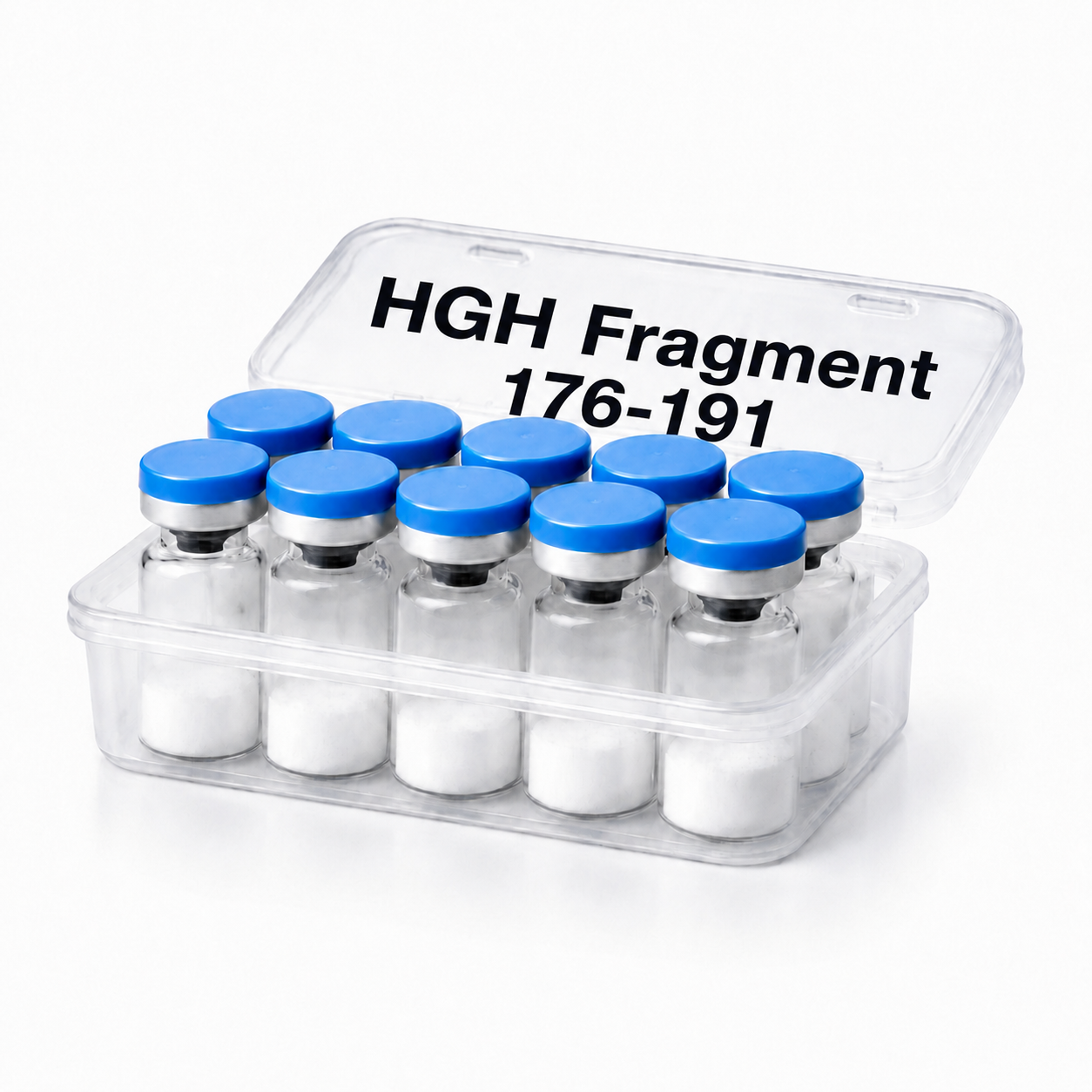
Buy HGH Fragment 176-191 Research Peptide | Proven Lipolytic GH Fragment | PrimaLab Peptide
HGH Fragment 176-191 is a synthetic 16-amino acid peptide matching the C-terminal region of human growth hormone (hGH), spanning positions 176 through 191 of the full 191-amino acid GH sequence. Researchers who buy HGH Fragment 176-191 research peptide use it to investigate lipolytic signalling pathways, fat metabolism mechanisms, and adipocyte biology in vitro — specifically targeting the metabolic activity of the hGH C-terminal domain without the broad systemic effects of full-length growth hormone. PrimaLab Peptide supplies research-grade HGH Fragment 176-191 at 99.3%+ purity, independently verified by Janoshik Analytical via HPLC and mass spectrometry, with a full batch-specific Certificate of Analysis included with every order.
What Is HGH Fragment 176-191?
HGH Fragment 176-191 is a synthetic peptide with the sequence H-Tyr-Leu-Arg-Ile-Val-Gln-Cys-Arg-Ser-Val-Glu-Gly-Ser-Cys-Gly-Phe-OH, containing a critical Cys7-Cys14 disulfide bridge that maintains the peptide’s structural integrity and is essential for its biological activity in research models. With a molecular formula of C₇₈H₁₂₅N₂₃O₂₃S₂ and a molecular weight of 1815.09 g/mol, it represents a well-characterised synthetic fragment of the hGH sequence.
A key distinction for research protocol design: HGH Fragment 176-191 is not the same as full-length Human Growth Hormone (HGH), and it is also structurally distinct from the modified fragment AOD9604, which adds a tyrosine residue to the N-terminus of a closely overlapping GH fragment (amino acids 177-191). These structural differences produce distinct pharmacological profiles in research and should be considered carefully when designing comparative studies. A detailed overview of GH fragment research is available through published PubMed literature on HGH Fragment 176-191.
HGH Fragment 176-191 Research Applications
The primary research interest in HGH Fragment 176-191 centres on its selective activity in fat metabolism pathways — distinct from the protein anabolic and IGF-1-stimulating effects of full-length growth hormone. Research using this fragment has examined:
- Lipolysis activation research: HGH Fragment 176-191 has been studied for its ability to stimulate lipolysis — the breakdown of stored triglycerides into free fatty acids — in adipocyte research models, a mechanism attributed to the C-terminal region of hGH
- Lipogenesis inhibition studies: Research has examined the fragment’s effects on inhibiting new fat storage (lipogenesis) in adipocyte cell culture models, complementing its lipolytic activity
- Beta-3 adrenergic receptor interaction: Studies have investigated HGH Fragment 176-191’s interaction with beta-3 adrenergic receptors in adipose tissue research models, exploring receptor-mediated fat metabolism pathways
- Insulin sensitivity research: Unlike full-length HGH, which can reduce insulin sensitivity at higher research concentrations, HGH Fragment 176-191 has been studied for a more insulin-neutral profile in metabolic research models
- Comparative fragment research: HGH Fragment 176-191 is frequently used as a reference compound in comparative studies alongside AOD9604 — which modifies the overlapping 177-191 fragment with an N-terminal tyrosine addition — to investigate structure-activity relationships in C-terminal GH fragment lipolytic research
- Cartilage and bone research: Some preclinical research has explored potential effects on cartilage and bone tissue in research models, separate from the compound’s primary metabolic research applications
Most published preclinical data on C-terminal GH fragment lipolytic activity come from rodent models and cell culture systems. It is important to note that no approved human clinical trials currently exist specifically for the unmodified HGH Fragment 176-191 peptide, the bulk of clinical-adjacent research has been conducted on the modified AOD9604 analogue. Researchers should factor this into their study design and literature review. Full research context is available through NIH-published research on growth hormone fragments and lipolysis.
Researchers exploring comprehensive fat metabolism and metabolic peptide research frequently combine HGH Fragment 176-191 studies with related compounds, including AOD9604, Tesamorelin, 5-Amino-1MQ, and Adipotide. Browse our complete Metabolic Peptides and Growth Hormone Peptides categories for the full range.
Disulfide Bridge — Why It Matters for Research Quality
The Cys7-Cys14 disulfide bridge in HGH Fragment 176-191 is not a minor structural detail — it is a defining feature of the peptide’s three-dimensional conformation and is critical for its biological activity in research models. Synthetic peptides containing disulfide bridges require controlled oxidative folding during synthesis to correctly form the disulfide bond. Incorrectly folded or reduced (free thiol) forms of the peptide produce structurally distinct compounds with different research properties.
PrimaLab Peptide supplies HGH Fragment 176-191 with mass spectrometry confirmation of the correct molecular weight (1815.09 g/mol), which verifies the presence of the disulfide bridge — a reduced (non-bridged) form of the same sequence would show a different MW due to the two additional hydrogen atoms on the free thiol groups. This level of analytical verification is why independent Janoshik testing is essential rather than optional.
Purity & Third-Party Testing
Every batch of HGH Fragment 176-191 supplied by PrimaLab Peptide is independently tested by Janoshik Analytical using:
- HPLC (High-Performance Liquid Chromatography) — quantitative purity determination confirmed at 99.3%+
- Mass Spectrometry — molecular identity and MW verification (1815.09 g/mol), confirming correct disulfide bridge formation
The batch-specific COA is available on request. Every batch is tested before dispatch — we do not batch-swap without notice and we do not publish unverified purity figures.
Storage & Reconstitution
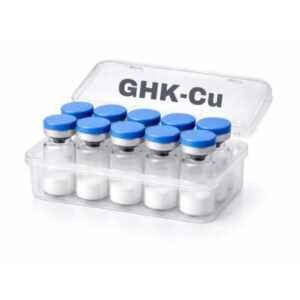
HGH Fragment 176-191 is supplied as a lyophilized powder for maximum stability during storage and transit.
- Lyophilized (sealed): Store at −20°C, protected from light and moisture. Properly stored lyophilized HGH Fragment 176-191 remains stable for extended periods
- After reconstitution: Store at 2–8°C and use promptly within your standard research protocol window
- Reconstitution solvent: Bacteriostatic Water (BAC Water) is the standard reconstitution solvent for HGH Fragment 176-191
- Technique: Add BAC Water slowly down the inside vial wall — never directly onto the powder. Swirl gently — do not shake. Allow 2–5 minutes for full dissolution. The solution should be clear and colourless
- Freeze-thaw cycles: Avoid repeated freeze-thaw cycles. Aliquot before freezing if your protocol requires multiple uses from the same batch
- Aseptic technique: Mandatory during all handling steps to prevent microbial contamination of the research sample
Product Specifications
| Product Name | HGH Fragment 176-191 |
| Sequence | H-Tyr-Leu-Arg-Ile-Val-Gln-Cys-Arg-Ser-Val-Glu-Gly-Ser-Cys-Gly-Phe-OH |
| Disulfide Bridge | C7-C14 |
| Length | 16 amino acids |
| Molecular Formula | C₇₈H₁₂₅N₂₃O₂₃S₂ |
| Molecular Weight | 1815.09 g/mol |
| Purity | 99.3%+ (Janoshik HPLC + Mass Spectrometry verified) |
| Form | Lyophilized powder |
| Storage (lyophilized) | −20°C, protect from light and moisture |
| Storage (reconstituted) | 2–8°C, use promptly |
| Reconstitution | Bacteriostatic Water (BAC Water) |
| Testing Lab | Janoshik Analytical |
| COA | Available per batch — Janoshik verified |
| Intended Use | In vitro laboratory research only |
Frequently Asked Questions — HGH Fragment 176-191
What is HGH Fragment 176-191 used for in research?
Researchers who buy HGH Fragment 176-191 research peptide use it to investigate lipolytic signalling pathways, fat metabolism mechanisms, beta-3 adrenergic receptor interactions, lipogenesis inhibition, and insulin-neutral metabolic profiles in adipocyte and fat metabolism research models. It is specifically studied as a selective C-terminal GH fragment tool for isolating the fat metabolism activity of the hGH sequence from its broader protein anabolic and IGF-1-stimulating effects. Published preclinical research is available on PubMed.
What is the difference between HGH Fragment 176-191 and AOD9604?
Both are synthetic C-terminal GH fragments studied for lipolytic activity, but they are structurally distinct compounds. HGH Fragment 176-191 spans amino acids 176–191 of the hGH sequence exactly. AOD9604 spans a slightly overlapping region (amino acids 177–191) with an additional N-terminal tyrosine residue added to improve stability and modify its pharmacological profile. These structural differences produce distinct research compounds that should not be used interchangeably in studies. Most available clinical-adjacent research data exists for AOD9604 rather than the unmodified Fragment 176-191.
Does HGH Fragment 176-191 have the same effects as full-length HGH in research?
No — this is a critical distinction for research design. Full-length HGH produces broad systemic effects including IGF-1 stimulation, protein anabolism, bone growth plate effects, and insulin sensitivity reduction at research concentrations. HGH Fragment 176-191 targets the C-terminal region’s lipolytic activity specifically, and research models have examined it for a more metabolically selective profile without the broad GH receptor-mediated systemic effects. This selectivity is precisely why it is used as a research tool for isolating fat metabolism mechanisms from full GH biology.
Why is the disulfide bridge in HGH Fragment 176-191 important?
The Cys7-Cys14 disulfide bridge is essential to the peptide’s correct three-dimensional structure and biological activity in research models. Incorrectly formed or reduced (free thiol) forms of the peptide are structurally distinct compounds that may produce different research results. PrimaLab Peptide verifies correct disulfide bridge formation through mass spectrometry confirmation of the correct MW (1815.09 g/mol) — a reduced non-bridged form of the same sequence would show a different molecular weight, making MS confirmation the definitive structural verification method.
What peptides are commonly studied alongside HGH Fragment 176-191?
Researchers buying HGH Fragment 176-191 for fat metabolism and metabolic research frequently explore related compounds from PrimaLab Peptide including AOD9604 (modified overlapping GH fragment for comparative studies), Tesamorelin (GHRH analogue for visceral fat metabolism research), CJC-1295 and Ipamorelin (GH axis research), and 5-Amino-1MQ (NNMT inhibitor for metabolic pathway research). Browse our Metabolic Peptides and Growth Hormone Peptides categories.
Are there clinical trials for HGH Fragment 176-191?
No approved human clinical trials currently exist specifically for the unmodified HGH Fragment 176-191 peptide. Published preclinical data primarily comes from rodent models and in vitro cell culture systems. The modified analogue AOD9604 has a more developed research literature base including some clinical-stage investigations. Researchers should factor this into study design, literature review, and data interpretation. HGH Fragment 176-191 is supplied by PrimaLab Peptide strictly for in vitro laboratory research use.
Related Research Peptides
Researchers buying HGH Fragment 176-191 research peptide for fat metabolism and GH axis research frequently explore these related compounds from PrimaLab Peptide:
- AOD9604 — modified HGH C-terminal fragment (177-191 + N-terminal Tyr) studied for lipolytic mechanisms
- Tesamorelin — full GHRH analogue studied for visceral adipose tissue metabolism research
- CJC-1295 — long-acting GHRH analogue for GH axis research
- Ipamorelin — selective GH secretagogue frequently stacked with CJC-1295
- Adipotide — proapoptotic peptide targeting adipose vasculature for complementary fat tissue research
- 5-Amino-1MQ — NNMT inhibitor studied in NAD+ and metabolic pathway research
Browse our complete Growth Hormone Peptides and Metabolic Peptides categories. Bulk researchers can apply for discounted rates through our Wholesale Portal. Reconstitute with BAC Water, available in our Accessories & Reconstitution Supplies section.
⚠️ For in-vitro laboratory research use only. Not intended for human or veterinary consumption. Must be handled by qualified research professionals in a controlled laboratory environment in accordance with all applicable institutional, ethical, and regulatory guidelines.
Reviews
There are no reviews yet.