
BPC-157 TB-500 Research — Understanding the Most Studied Healing Peptide Combination
A complete researcher’s guide to two of the most extensively studied healing peptides in published preclinical science — their mechanisms, research applications, and laboratory protocol considerations.
📁 Research Guides |
BPC-157 TB-500 research represents the most widely published dual healing peptide combination in preclinical science. BPC-157 and TB-500 are the two most frequently co-studied healing research peptides available individually each has accumulated a substantial body of peer-reviewed literature, and together they form the most comprehensive dual-pathway healing peptide research design available to laboratory researchers worldwide.
This BPC-157 TB-500 research guide covers what each compound is, how their mechanisms differ, why researchers study them together, and the practical laboratory considerations for working with both compounds. All products referenced are available from PrimaLab Peptide with independent Janoshik Analytical COA documentation included with every order.
Table of Contents
What Is BPC-157?
BPC-157 (Body Protection Compound 157) is a synthetic 15-amino acid pentadecapeptide originally derived from a protective protein sequence found in human gastric juice. CAS: 137525-51-0 | MW: 1419.53 g/mol. It is one of the most extensively studied healing research peptides in published preclinical science, with a broad literature base covering multiple tissue types and biological systems.
BPC-157 Quick Specs
| Full Name | Body Protection Compound 157 |
| Sequence | Gly-Glu-Pro-Pro-Pro-Gly-Lys-Pro-Ala-Asp-Asp-Ala-Gly-Leu-Val |
| CAS Number | 137525-51-0 |
| Molecular Weight | 1419.53 g/mol |
| Amino Acids | 15 (pentadecapeptide) |
| Purity (PrimaLab) | 99.36% — Janoshik HPLC + MS verified |
Published peer-reviewed research available through PubMed has examined BPC-157 across the following research areas:
- Gastrointestinal mucosal biology — gastric mucosal protection, ulcer healing research models, intestinal anastomosis repair, and NSAID-induced gastric damage models
- Angiogenesis research — VEGF upregulation and new blood vessel formation in tissue repair models
- Tendon and ligament biology — tendon cell proliferation, collagen organisation and repair in tendon injury models
- Neuroprotective mechanisms — neurological tissue research including dopaminergic system pathway studies
- Growth factor receptor research — VEGFR and EGFR pathway interactions as mediators of multi-system tissue repair activity
What Is TB-500?
TB-500 (Thymosin Beta-4 Acetate) is a synthetic 43-amino acid peptide corresponding to the active actin-binding sequence of Thymosin Beta-4 — a ubiquitous intracellular protein found in virtually all mammalian cells where it plays a central role in actin sequestration and cellular migration. Its N-terminal acetylation (Ac-) is a defining structural feature essential for actin G-monomer binding affinity and biological activity in research models.
TB-500 Quick Specs
| Full Name | Thymosin Beta-4 Acetate (TB-500) |
| Amino Acids | 43 — N-terminally acetylated |
| Molecular Formula | C₂₁₂H₃₅₀N₅₆O₇₈S |
| Molecular Weight | 4963.5 Da |
| Purity (PrimaLab) | 99.36% — Janoshik HPLC verified |
Published research available through PubMed has examined TB-500 across the following research areas:
- Actin biology and cytoskeletal research — G-actin pool regulation, actin polymerisation dynamics and cytoskeletal remodelling
- Cellular migration research — fibroblast, endothelial cell and keratinocyte migration in wound healing models
- Muscle fibre repair — satellite cell activation and myoblast migration in skeletal muscle repair models
- Anti-fibrotic signalling — fibrotic marker expression and TGF-β pathway modulation
- Cardiac tissue research — cardiac tissue repair and cardiomyocyte protection in preclinical models
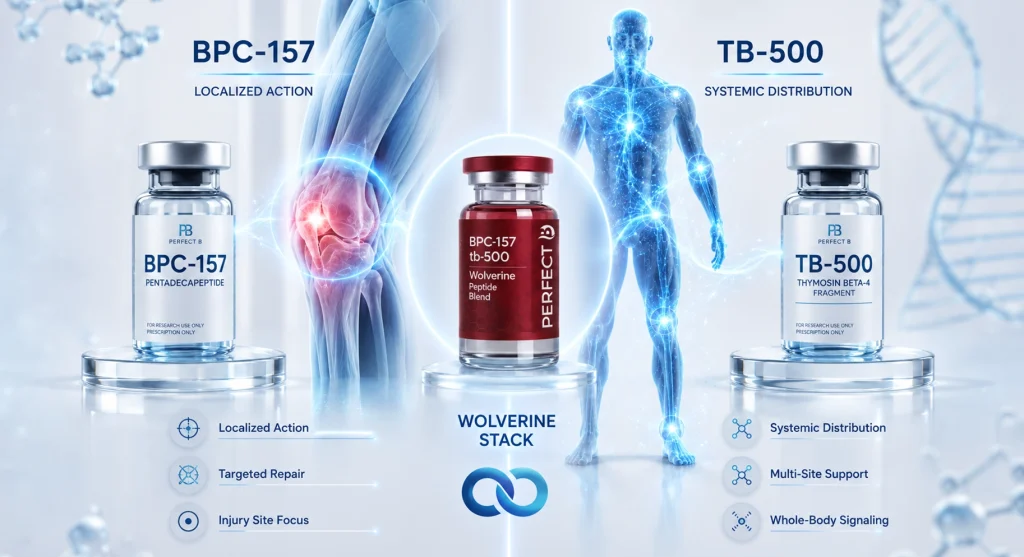
How Do BPC-157 TB-500 research peptides Differ Mechanistically?
Understanding the mechanistic differences between BPC-157 and TB-500 is essential for research protocol design. These are not interchangeable compounds — they address different biological processes through distinct molecular mechanisms.
Why Researchers Study BPC-157 TB-500 research Together
The dual-pathway research rationale for combining BPC-157 and TB-500 is well-established in published preclinical literature. Each compound contributes a distinct and complementary mechanism to tissue repair and healing research — BPC-157 through growth factor receptor pathways and vascular biology, TB-500 through actin cytoskeletal regulation and cellular migration biology. These are complementary rather than redundant mechanisms.
🔬 Research Combination Rationale
BPC-157 covers growth factor/angiogenic healing mechanisms. TB-500 covers actin/cytoskeletal healing mechanisms. Together they provide a more comprehensive dual-pathway research design than either compound alone — which is why this combination is the most published dual healing peptide pairing in preclinical science.
PrimaLab Peptide supplies both compounds individually and as combined research formulations:
- BPC-157 + TB-500 Blend — two separately supplied and independently Janoshik-tested vials with individual batch COAs
- Glow Blend (TB-500 10mg + BPC-157 10mg + GHK-Cu 50mg) — triple healing research stack adding copper peptide collagen synthesis coverage
- Klow Blend (TB-500 + BPC-157 + GHK-Cu + KPV) — the most comprehensive four-compound healing and anti-inflammatory research formulation
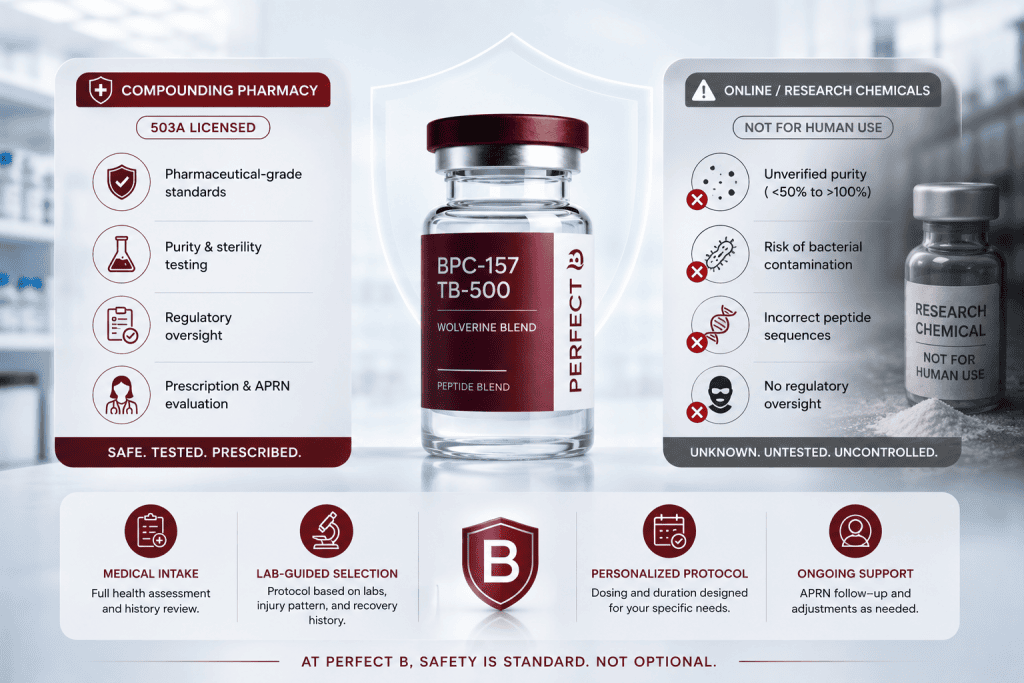
Why Purity Matters in Healing Peptide Research
In tissue repair and healing biology research, peptide purity is not a commercial consideration — it is a scientific requirement. Impure or low-grade research compounds introduce confounding variables that invalidate experimental results and compromise data reproducibility regardless of the experimental design.
99.36%
BPC-157 Purity
Janoshik HPLC + MS
99.36%
TB-500 Purity
Janoshik HPLC verified
100%
Batches Tested
No exceptions
Both BPC-157 and TB-500 are independently tested by Janoshik Analytical before dispatch. The batch-specific COA is included with every order and cross-referenceable on the Janoshik database using the batch number from your vial.
Storage & Reconstitution Guide
Both BPC-157 and TB-500 are supplied as lyophilized (freeze-dried) powders with similar storage and reconstitution requirements. Reconstitute both with Bacteriostatic Water (BAC Water) — available in our Accessories & Reconstitution Supplies section.
Reconstitution Protocol — Both Compounds
- Allow sealed vial to reach room temperature before opening
- Use sterile needle and syringe — clean septum with alcohol swab
- Inject BAC Water slowly down the inside vial wall
- Swirl gently — never shake or vortex
- Allow 2–5 minutes for complete dissolution
- Solution should be clear and colourless
- Label with compound, batch number, concentration and date
Ready to Order BPC-157 and TB-500?
Both available from PrimaLab Peptide at 99.36% purity with independent Janoshik COA documentation included with every order. Worldwide tracked shipping.
⚠️ Research Use Disclaimer: All products referenced in this article are intended exclusively for in-vitro laboratory research purposes only. They are not approved by any regulatory authority for human or veterinary use. Nothing in this article constitutes medical advice, diagnosis, or treatment recommendations. Researchers are solely responsible for compliance with all applicable local regulations.